


Local News
Wisconsin Celebrates 50 Years of Wild Turkey Restoration
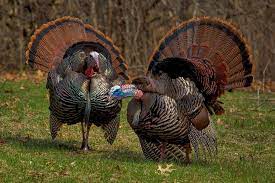
Fifty years after wild turkeys were reintroduced to Wisconsin, conservationists, hunters and volunteers of the National Wild Turkey Federation gathered on Bascom Hill at the University of Wisconsin–Madison on Sunday, May 17, to celebrate one of the state’s greatest wildlife comeback stories.
The Wisconsin NWTF State Chapter hosted its “Flock the Lawn” event, covering the iconic hill with turkey decoys in a fun twist on UW–Madison’s long-running flamingo tradition that began in 1979, when students placed more than 1,000 pink flamingos on Bascom Hill.
The event celebrated the 50th anniversary of Wisconsin’s wild turkey reintroduction effort, a conservation partnership that helped restore a native species once lost from the state.
Wild turkeys are native to Wisconsin, but by the late 1800s, they had disappeared from the state entirely due to unregulated hunting and habitat loss caused by widespread logging and settlement. By the early 1900s, wild turkeys were considered extirpated in Wisconsin.
Several earlier attempts to restore the birds using pen-raised turkeys failed. In 1976, the Wisconsin Department of Natural Resources partnered with the Missouri Department of Conservation on a new approach, using wild-trapped birds. Missouri sent 29 wild Eastern turkeys to Wisconsin for release in Vernon County in western Wisconsin.
In exchange, Wisconsin traded ruffed grouse to Missouri as part of the agreement. The trade became part of conservation history.
What started as a small reintroduction effort quickly grew into one of the nation’s greatest wildlife restoration success stories. Over the following years, hundreds more wild turkeys from Missouri were relocated to Wisconsin to help establish healthy breeding populations across the state.
At the time, many believed wild turkeys would never survive Wisconsin’s harsh winters, especially in northern parts of the state. Today, wild turkeys thrive across nearly all suitable habitat in Wisconsin, including areas where biologists once thought they could not survive.
Wisconsin now supports one of the strongest wild turkey populations in the country. Hunters regularly harvest more than 50,000 birds during the spring season, placing Wisconsin among the top turkey hunting states in North America.
“We are celebrating something that is so amazing, that 50 years ago, we were trading eight ruffed grouse per turkey with the state of Missouri,” said Tylor Flynn, NWTF regional director for Wisconsin. “And now over the last couple of years, we are averaging over 50,000 birds harvested annually.”
Flynn said the event was also a celebration of the many partners who helped make the restoration effort possible.
“So we are out here today celebrating just everything NWTF, turkey, the Wisconsin DNR and everybody that’s had a hand in helping us get to this point,” Flynn said.
The event also follows major investments by the Wisconsin NWTF State Chapter to support conservation and outreach efforts across the state in 2026. This year, the state chapter allocated $116,982 for conservation projects and another $50,000 for education and outreach initiatives, including events, chapter scholarships and 4-H shooting sports programs. In addition, NWTF Super Fund projects will leverage more than $6.2 million in matching partner and grant funding. Every year, the Wisconsin NWTF State chapter continues to invest in projects that conserve wild turkeys and carry forward the conservation legacy than began 50 years ago.
The “Flock the Lawn” event celebrated not only the success of the past 50 years, but also the future of conservation and hunting in Wisconsin. NWTF Wisconsin members brought many of their own turkey decoys to help fill Bascom Hill for the display, while additional decoys were donated by AvianX. After the celebration, the AvianX decoys will be donated to Wisconsin learn-to-hunt programs to help introduce new hunters to the outdoors.
The event also featured raffles, educational programs and appearances from retired Wisconsin DNR staff members who helped with the original turkey reintroduction effort in 1976.
From a species once extirpated in Wisconsin to thriving flocks found across the state today, the return of the wild turkey stands as a reminder of what conservation partnerships, habitat work and dedicated volunteers can accomplish over generations.