


Wisconsin News
Volunteers helping restore and return photos and heirlooms lost in Menasha tornado
By Lorin Cox
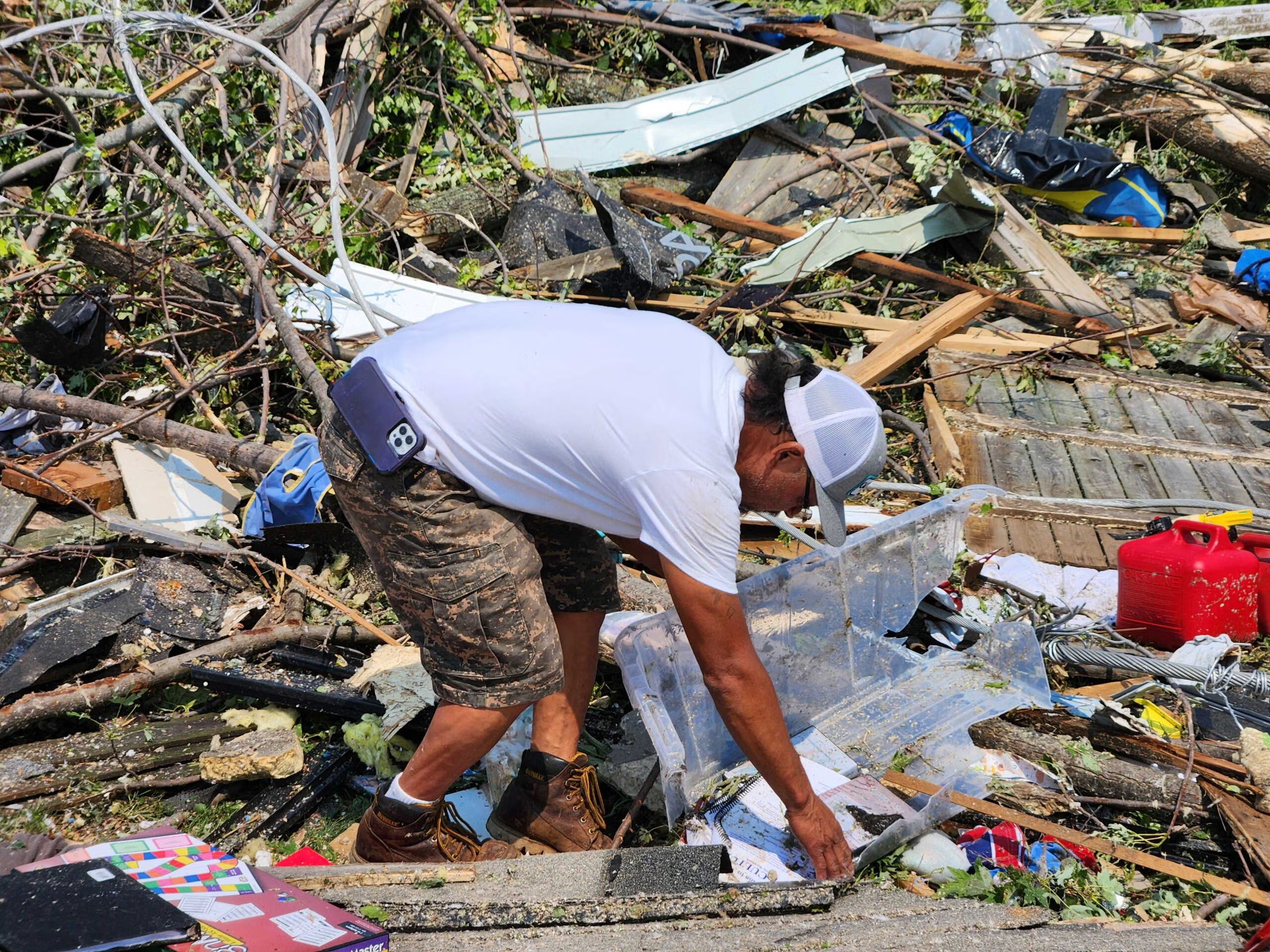
When an EF-3 tornado tore through parts of Menasha and Appleton on July 27, Julie Llewellyn knew she needed to help.
Her part of Appleton avoided serious damage, but her former neighborhood on Doty Island between Menasha and Neenah took a direct hit.
“This is my community,” Llewellyn told WPR’s “Wisconsin Today.” “I wanted to do something that wasn’t giving them another Facebook page to look at. I wanted to do something specific.”
She and her friend Fran Armstrong decided to start collecting photos, family heirlooms and other sentimental items that were scattered around by the storm, with the hopes of returning them to the families that lost them.
They’re calling it “Weathered, not Lost,” and Armstrong is also offering to help digitally restore pictures that suffered damage.
“The big trees are now being removed. People are done raking, and they have so many things to go through, even in their homes,” Llewellyn said. “I know that I have pictures from my parents and grandparents that are precious to me if they were to be lost. So I hope we can find some and bring them back to the people.”
They put out collection bins at two sites around the area, asking people to drop off items if they are unable to find the owners themselves.
So far, they’ve received a wide range of family memories, from baby pictures and graduation photos to old letters and writings, many of them water damaged or covered in insulation debris.
They’re still in the collecting phase before they take on the challenge of restoring and returning the lost items.
Llewellyn and Armstrong are two of the thousands of volunteers who have stepped up to help in the weeks of cleanup after the storm.
Carolyn Desrosiers is CEO of Volunteer Fox Cities, which has helped coordinate people wanting to donate their time and energy.
She told “Wisconsin Today” that the need for volunteers has shifted from the emergency response to more community rebuilding efforts.
“In the initial days after the disaster, we were organizing mass groups of people to go out and to do cleanup or to do canvassing door-to-door to make sure that residents of the affected areas had their needs met,” Desrosiers said. “Now, we’ve slowed down on those mass cleanup efforts and moved to more targeted projects.”
She said most of the work left to be done on properties needs to be done by contractors, and many people are still waiting on insurance.
But one project they’re focusing on is restoring Menasha’s Marigold Mile, a stretch of thousands of flowers across the city that was neglected as the storm response took priority.
The need for financial support is undergoing a similar shift at this stage in the recovery process.
United Way Fox Cities organized a community response fund for tornado relief. President and CEO Lisa Kogan-Praska told “Wisconsin Today” that they’re working quickly to get incoming donations turned around and distributed to families and local organizations.
“In the very early days, we tried to deploy those dollars to nonprofits to go out and do some of that crisis response, making sure that people had food and water and tarps for their roofs,” Kogan-Praska said. “The next phase that we’re entering now is focusing on some of those short-term immediate financial needs that we know families are having.”
The funds are being managed in a partnership by the Community Foundation for the Fox Valley Region, where President and CEO Curt Detjen has seen millions of dollars come in between direct donations, corporate contributions and pledges.
He told “Wisconsin Today” that the generosity is a reflection of how the community is banding together and bracing for a recovery process that could take years to return to normal.
“The donations have literally been coming in from all over, and in some cases, outside the state of Wisconsin” Detjen said. “ All you have to do is take a look at the pictures and the images, and it pulls on people’s heartstrings, and they say, ‘Gosh, that could have happened to us. It could have happened in my community.’”
Wisconsin Public Radio, © Copyright 2026, Board of Regents of the University of Wisconsin System and Wisconsin Educational Communications Board.