


Wisconsin News
Inmates at Redgranite prison prepare monarch butterflies for their long journey south
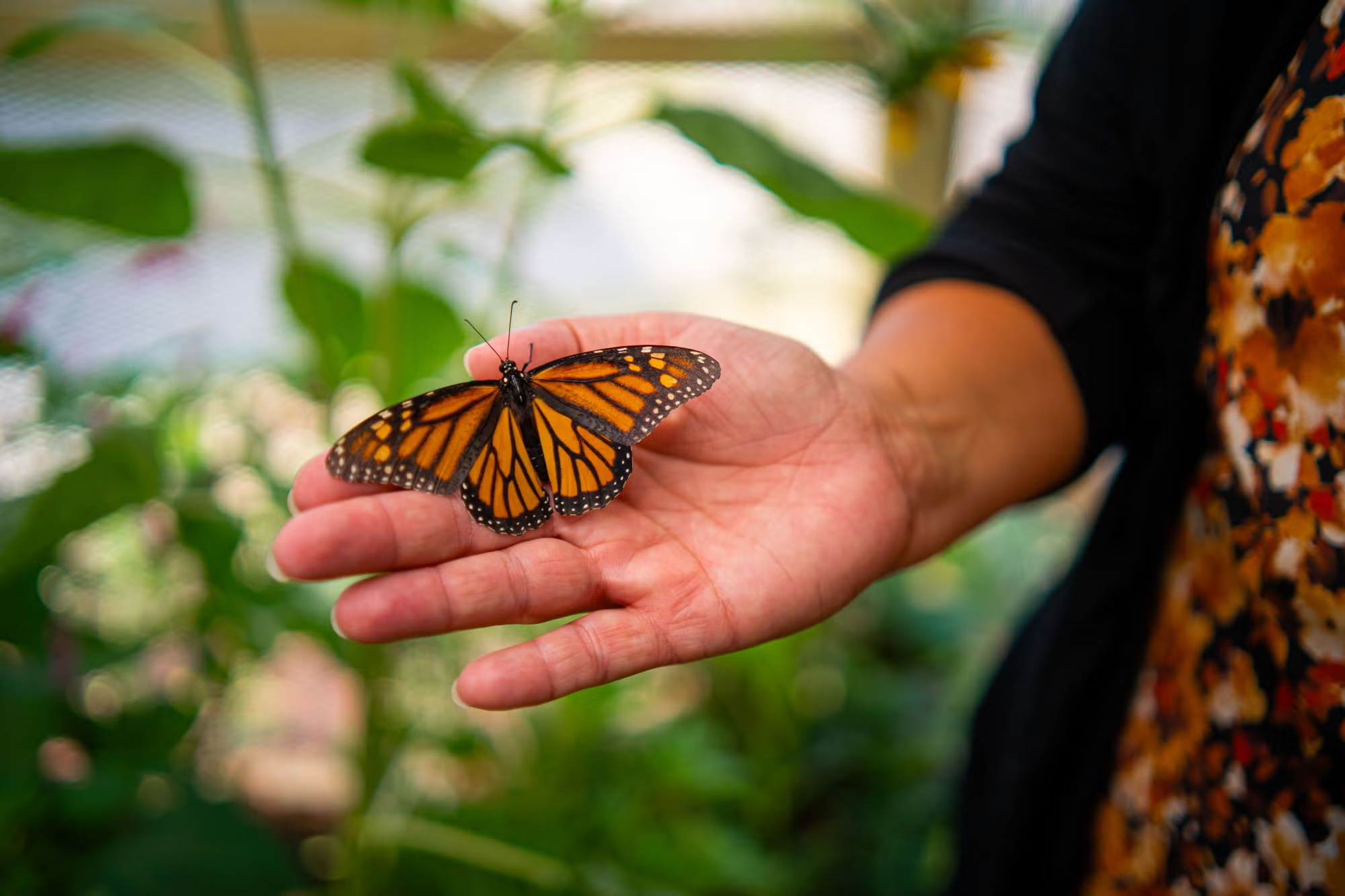
At this time of year, millions of monarch butterflies are beginning their 3,000-mile migration to Mexico. Some of them spent their days as caterpillars behind the walls of a Wisconsin prison.
For the past two years, men incarcerated in Redgranite Correctional Institution in central Wisconsin have helped raise and release the delicate insects in an effort to boost the declining population.
The program was started by Carrie Jahnke, recreation leader at Redgranite Correctional Institution — also known within the prison as “the butterfly lady.” She wanted to lead an activity that was more physically accessible than the usual sports.
It started in a spare room in the prison, where 12 participants cared for tiny monarch larvae as they grew and metamorphosed into butterflies. This year, there are 20 participants, and thanks to a grant from the Natural Resources Foundation they’ve moved into a new “monarch mansion” — officially called the “Refuge for Growth, Change and Inspiration.” It’s a covered enclosure with four rearing cabinets and two flower gardens inside, where they keep the butterflies for at least 24 hours after emerging from their chrysalises.
In a program survey, one participant wrote about what it’s like in the monarch mansion just before release.
“There were so many (butterflies) in one area that I could even hear the wings flapping,” he wrote.
Leaders at other Wisconsin prisons have come to Redgranite to see the butterfly program in action, hoping to eventually bring monarchs to their own institutions.
On the day-to-day, participants clean and sanitize the habitat and make sure that the caterpillars have enough to eat. The latter involves planting and collecting milkweed — the caterpillars’ food source — as well as cultivating pollinator-friendly plants. The program also involves environmental education through reading and classroom discussion.
“It’s developing job skills and supporting rehabilitation,” Jahnke told WPR’s “Wisconsin Today.” “They have to work as a team to come to the common goal and make sure that we have healthy monarchs to release into the wild.”
It also gives participants a sense of purpose.
“I find it extremely rewarding how our program can have a positive benefit beyond our prison, and I’m proud to tell others that I’ve played a small role in it,” another participant wrote about the program.
The benefits extend to people — and butterflies — outside of the program. Participants share what they’ve learned about butterfly conservation with their loved ones, and are able to bring fellow inmates to witness their work. Plus, it adds beauty and new life for all to experience at Redgranite.
“I’ll get random reports, like ‘Miss Jahnke, I saw 23 butterflies today,’” Jahnke said. “They’ll sit and watch the monarchs because we have so many beautiful flower gardens on the property … they’re always around for people to enjoy.”
At this point in the year, most of the butterflies have been released and are flying south. There are just a few caterpillars still in their chrysalises, waiting to be released.
Wisconsin Public Radio, © Copyright 2026, Board of Regents of the University of Wisconsin System and Wisconsin Educational Communications Board.