


Wisconsin News
Data shows outdoor recreation boosts Wisconsin’s economy by record $12B
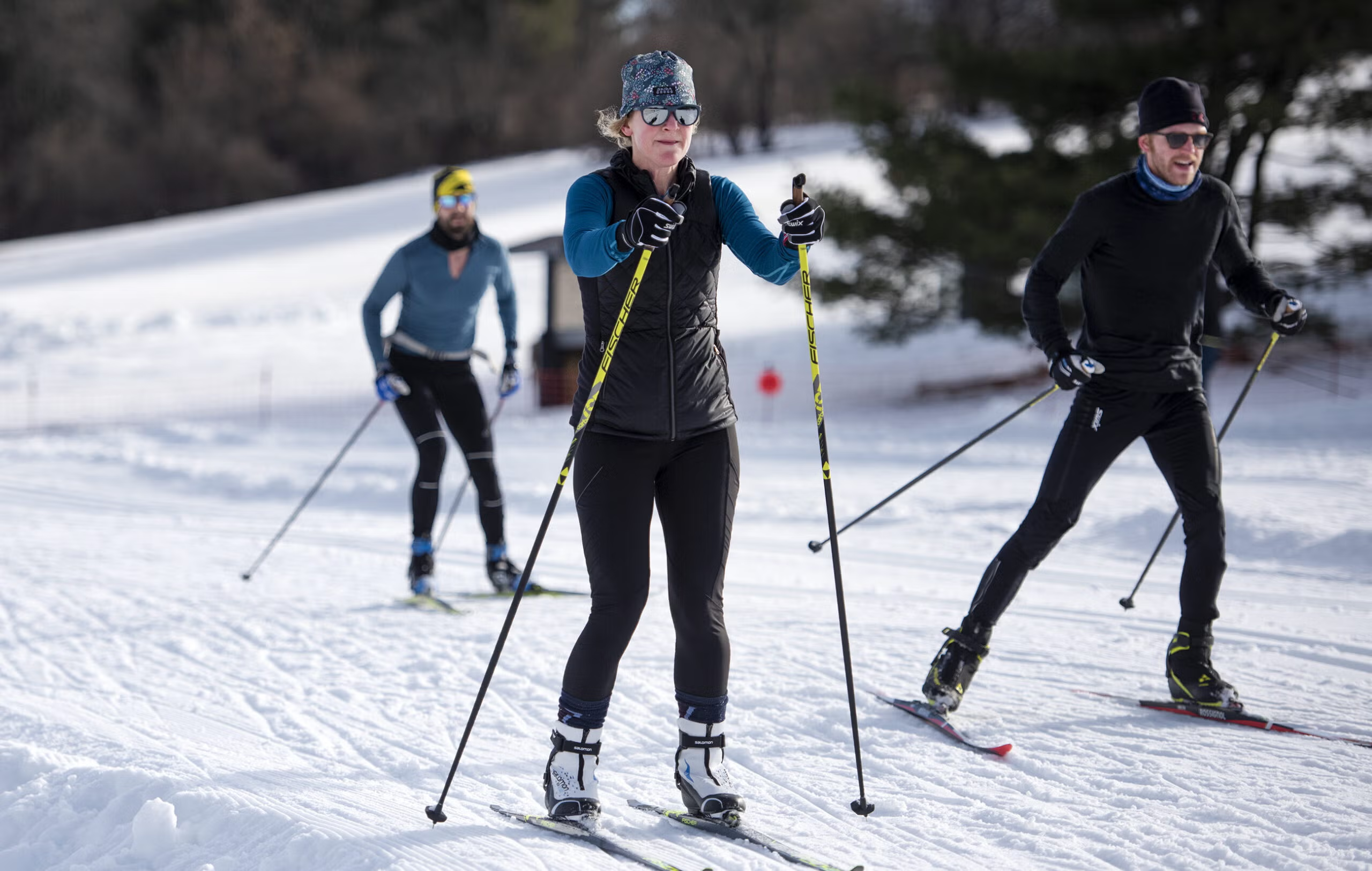
Outdoor enthusiasts provided a record-breaking $12 billion boost to Wisconsin’s economy, marking the state’s third record year in a row for outdoor recreation.
The multi-billion dollar contribution to the state’s gross domestic product highlights continued growth of Wisconsin’s outdoor recreation industry as people flock to the state’s waters, woods and trails. Wisconsin ranked 20th among all states for value-added growth in outdoor recreation in 2024, which was largely on track with growth nationwide.
Gov. Tony Evers announced the record-breaking year Monday following the latest release of data from the U.S. Bureau of Economic Analysis, which had been delayed for months. Wisconsin’s Democratic governor previously wrote a letter to the Trump administration urging the data’s release.
“Outdoor recreation draws visitors from near and far in all four seasons, supporting local businesses, creating local jobs, and showcasing everything that makes Wisconsin the special place it is,” Evers said in a statement. “While unnecessary delays slowed the release of this data down, this record-breaking growth highlights the strength and momentum of outdoor recreation in Wisconsin.”
Evers created the Office of Outdoor Recreation in 2019. The office received permanent funding and staffing under the current two-year, $111 billion state budget signed by Evers in July, which the governor said will ensure the state remains a top destination.
Overall, the state’s outdoor recreation industry accounts for 2.7 percent of Wisconsin’s gross domestic product, supporting 100,139 jobs. Employment growth is up 1.6 percent from 2023. The outdoor recreation industry represents 3.2 percent of all jobs in the state, providing $5.7 billion in employee compensation.
Wisconsin Tourism Secretary Anne Sayers said outdoor recreation is a top draw for visitors as the state’s tourism industry drew 114.4 million visits and generated a record-breaking $25.8 billion in 2024.
“Whether it’s casting a line at sunrise, exploring a new trail with friends or gearing up for a weekend on the water, the outdoors is where lasting memories are made in our state,” Sayers said in a statement. “This continued growth reflects not only our incredible natural assets but also the dedicated guides, outfitters, manufacturers and tourism professionals who bring these experiences to life.”
Office of Outdoor Recreation Director Cassie Mordini told WPR that Wisconsin’s outdoor recreation economy is robust and remains strong.
“We saw growth in several categories. Part of that is thanks to our powerhouse, outdoor recreation-related manufacturing,” Mordini said. “Wisconsin actually ranks fourth in the country for our share of all jobs that are outdoor recreation-related manufacturing.”
Mordini said that represents around 10,000 jobs. Manufacturing in the outdoor recreation industry contributed more than $2.1 billion to the state’s economy.
Sales of outdoor apparel and accessories contributed $1.3 billion to the state’s gross domestic product. Boating and fishing contributed $1 billion. Wisconsin also ranked second in the nation for motorcycling and ATVing, generating $1 billion during the same time period.
Randy Harden, president of the Wisconsin ATV/UTV Association, said he attributes the state’s ranking to Wisconsin’s natural resources and more than 65,000 miles of road routes and more than 2,300 miles of trails.
“That’s what makes it attractive to people. You can literally start at the southern part of Wisconsin and go all the way up to Superior by road routes and trails,” Harden said. “Most states don’t have that.”
Since 2023, tourism spending tied to long-distance and local trips also grew 7.2 percent and 2.3 percent respectively, according to the state.
Nationwide, the outdoor recreation industry grew to nearly $1.25 trillion in gross output and contributed around $696.7 billion to the nation’s gross domestic product.
While 2024 was a record year for Wisconsin, Mordini said the state and nation saw the slowest growth in outdoor recreation since 2020. At that time, people were flocking to the outdoors amid shutdown orders at the onset of the COVID-19 pandemic.
Mordini said the slowdown was likely driven by inflation and less consumer spending.
Wisconsin Public Radio, © Copyright 2026, Board of Regents of the University of Wisconsin System and Wisconsin Educational Communications Board.