


Wisconsin News
New investigation unpacks challenges 911 dispatchers face in Wisconsin and nationwide
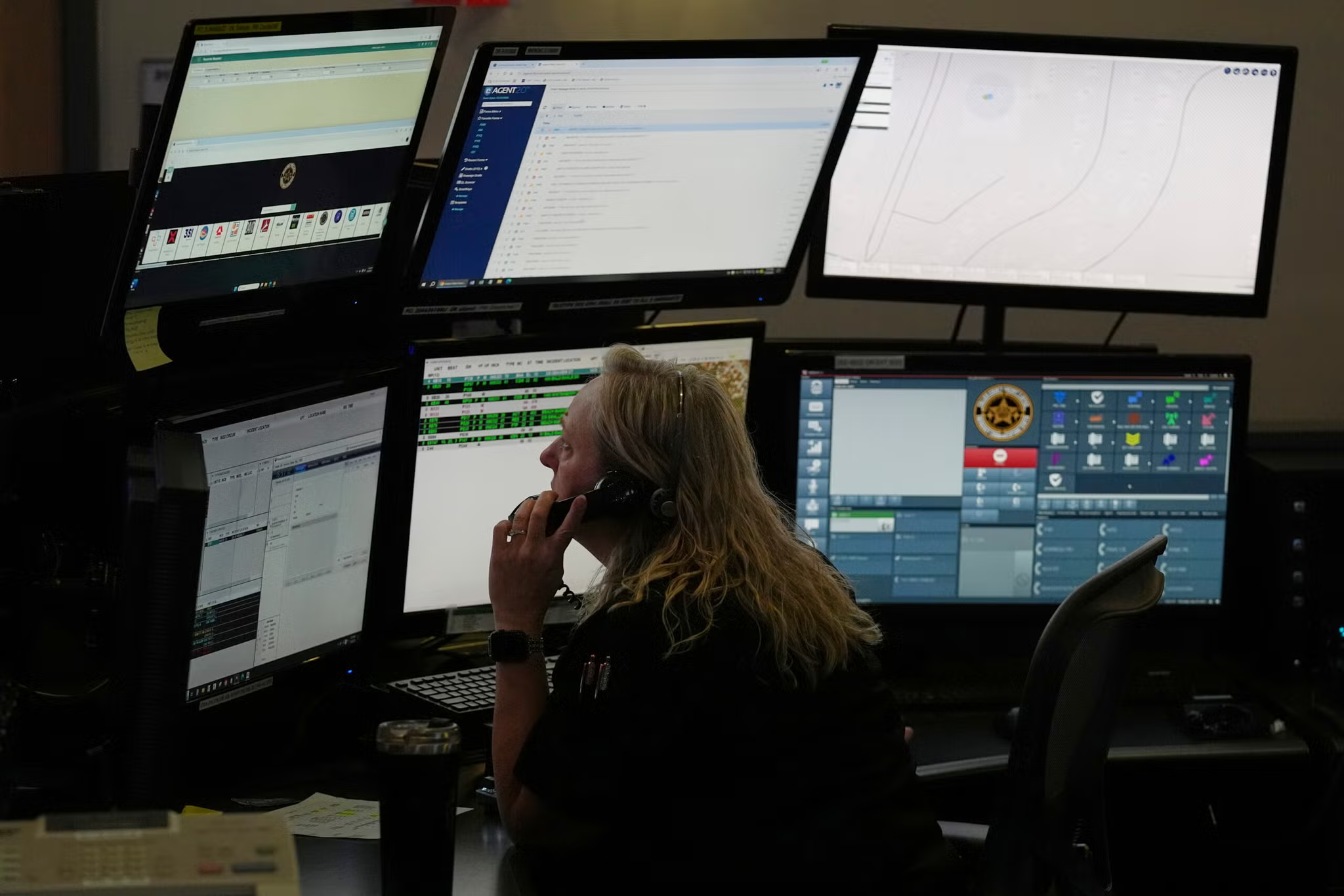
More than 1 in 5 dispatch centers in America’s 100 biggest cities fail to answer 911 calls fast enough, according to an investigation for a recent episode of the public radio show “Reveal.” Reporter Byard Duncan found Dane County to be among the majority of those centers meeting the mark and sought to understand why.
When someone calls 911, dispatch centers try to answer 90 percent of calls within 15 seconds and 95 percent of calls within 20 seconds. That standard, set by the National Emergency Number Association, can be important to make sure first responders can arrive to assist callers and ultimately save lives.
Duncan is an investigative reporter covering business and consumer protection issues for “Reveal.” He told WPR’s “Wisconsin Today” that staffing crises have plagued dispatch centers in Wisconsin and across the nation for years.
“This is not a job for everyone. It takes a special type, takes a lot of resiliency, a lot of toughness, and frankly, just a capacity for dealing with a lot of trauma a lot of the time,” Duncan said.
Studies have found that 911 dispatchers face consequences from their line of work and are at a statistically high risk for acute stress disorder, depression and post-traumatic stress disorder.
Duncan said the staffing crises reached a peak nationally during and immediately after the height of the COVID-19 pandemic.
“People were just burning out with the number of 911 calls,” he said. “I think also people were looking for other jobs and were getting a cushion (with) government subsidies to be able to step away from the really hard and traumatic work and explore new careers … a lot of places have been clawing their way back to full staffing ever since then, with varying degrees of success.”
Duncan found that Dane County’s dispatch center has managed to recover from staffing woes from several years ago, with the dispatch having between 90 percent and full staffing over the course of his investigation.
“Although it’s true that the challenges to meeting that standard are pretty multifaceted … the thing everybody always told me was often it’s a question of simply having enough dispatchers there to pick up the volume of calls that are coming in fast enough,” Duncan said. “In Dane County, they’re lucky to be very well staffed.”
The 911 dispatch center in Waukesha County faced this kind of staffing shortage as well, having less than half of the 46 dispatchers needed at the center in 2023.
Gail Goodchild is the Director of Emergency Preparedness for Waukesha County. She told “Wisconsin Today” the loss of dispatchers led to a dynamic that put additional pressure on the center’s remaining dispatchers.
“You have less staff that are expected to do more work in a stressful environment and expected to pick up overtime shifts, so working back-to-back 12-hour shifts … you get done with your shift, you go home, maybe say ‘Hi’ to your family, eat a little something, take a quick nap, get up, get ready for your work day and then you go back to work,” Goodchild said. “It’s a very vicious cycle that really weighs on dispatchers’ mental health.”
Goodchild said they were able to improve staffing by increasing pay and “hiring for fit” — recruiting 911 dispatchers who are positive and motivated to do the work, rather than focusing solely on individuals who had previous dispatching or customer service experience.
“That goes a really long way when you’re stuck in a room with your peers for 8 to 12 hours. We want them to contribute to that positive culture and that positive environment,” Goodchild said.
Both Duncan and Goodchild identified an issue that sounds administrative but is important to dispatchers: how they are classified by the state and federal government.
The federal government classifies 911 dispatchers as holding “office and administrative support” jobs that are “precluded from administering actual care,” according to the Bureau of Labor Statistics and a statement from the Office of Management and Budget.
Advocates have called for changing that, to something similar to first responders — a move they argue would afford dispatchers improved pay, retirement benefits and improved access to mental health counseling. States including Idaho and Arizona have reclassified dispatchers and have received these types of benefits.
Wisconsin still classifies 911 dispatchers as administrative support staff.
Goodchild said dispatchers at her center would see improved mental health and retirement benefits if their workers were reclassified.
“When you’re being classified as ‘officer administrative support,’ it doesn’t fully recognize the work and the stress load that the dispatchers have,” Goodchild said. “I believe that morale would increase if they were appropriately classified, reflecting the work that they truly do.”
Wisconsin Public Radio, © Copyright 2026, Board of Regents of the University of Wisconsin System and Wisconsin Educational Communications Board.