


Local News
Spring ahead (and lose sleep) Saturday night
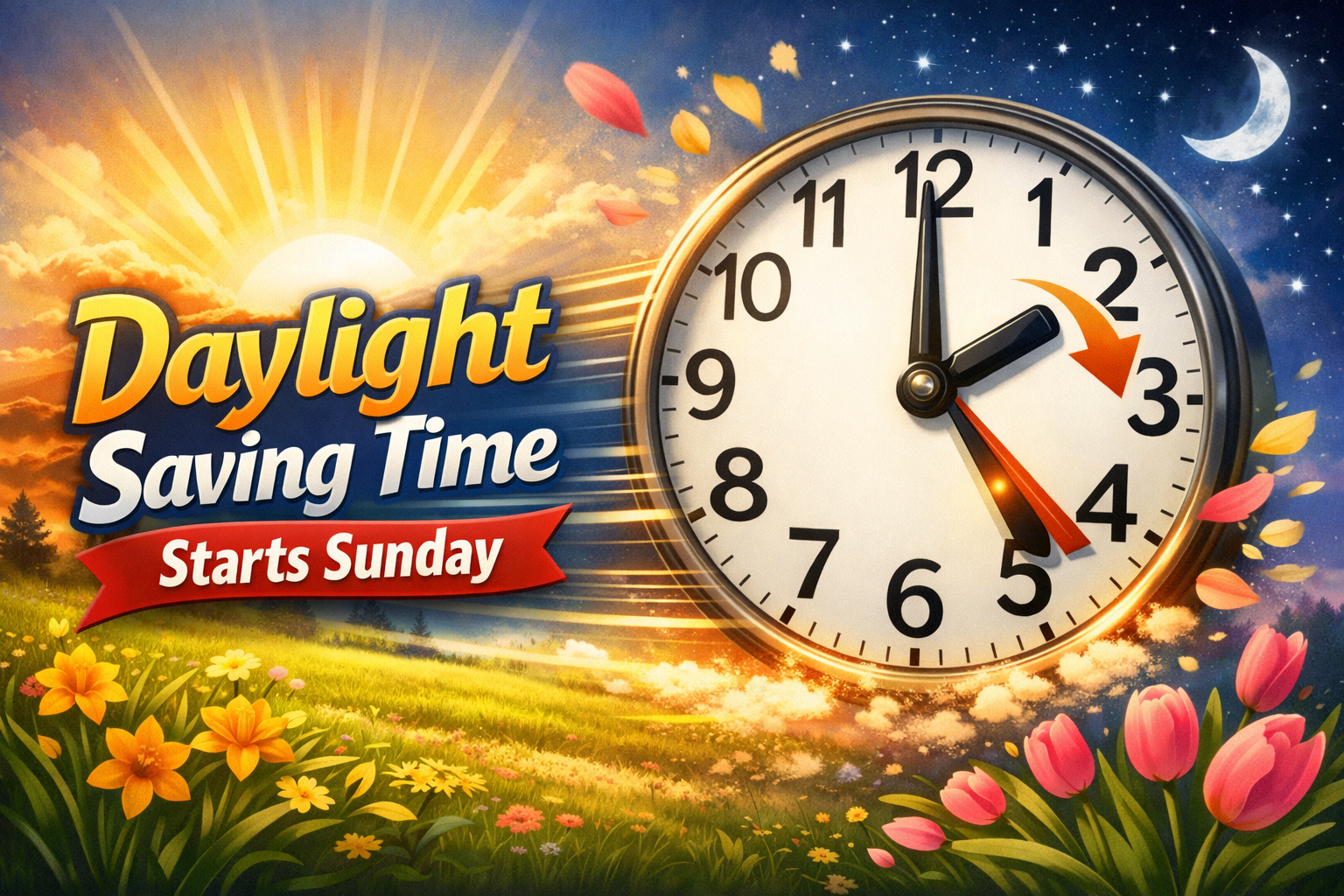
Clocks across most of the United States will “spring forward” one hour early Sunday morning as Daylight Saving Time begins on March 8, 2026.
At 2:00 a.m., clocks will move ahead to 3:00 a.m., meaning residents will lose an hour of sleep but gain an extra hour of daylight in the evening. The time change will remain in effect until early November.
Daylight Saving Time was first widely adopted in the United States during World War I as a way to conserve energy by making better use of natural daylight. The idea was that longer evening daylight hours would reduce the need for artificial lighting and save fuel. The practice was later standardized with the Uniform Time Act of 1966, which created a consistent schedule for states choosing to observe the time change.
Supporters say the shift provides longer evenings for outdoor activities, shopping, and recreation. Critics, however, often point to disrupted sleep schedules and limited evidence that it significantly saves energy.
While most states observe the change, Hawaii and most of Arizona do not participate in Daylight Saving Time.
As the clocks move forward this weekend, officials also recommend using the opportunity to check smoke detector batteries and review household emergency plans.
Daylight Saving Time will end on Sunday, November 1, 2026, when clocks “fall back” one hour.