


Wisconsin News
State grant is helping Wisconsin farmers stock food pantries
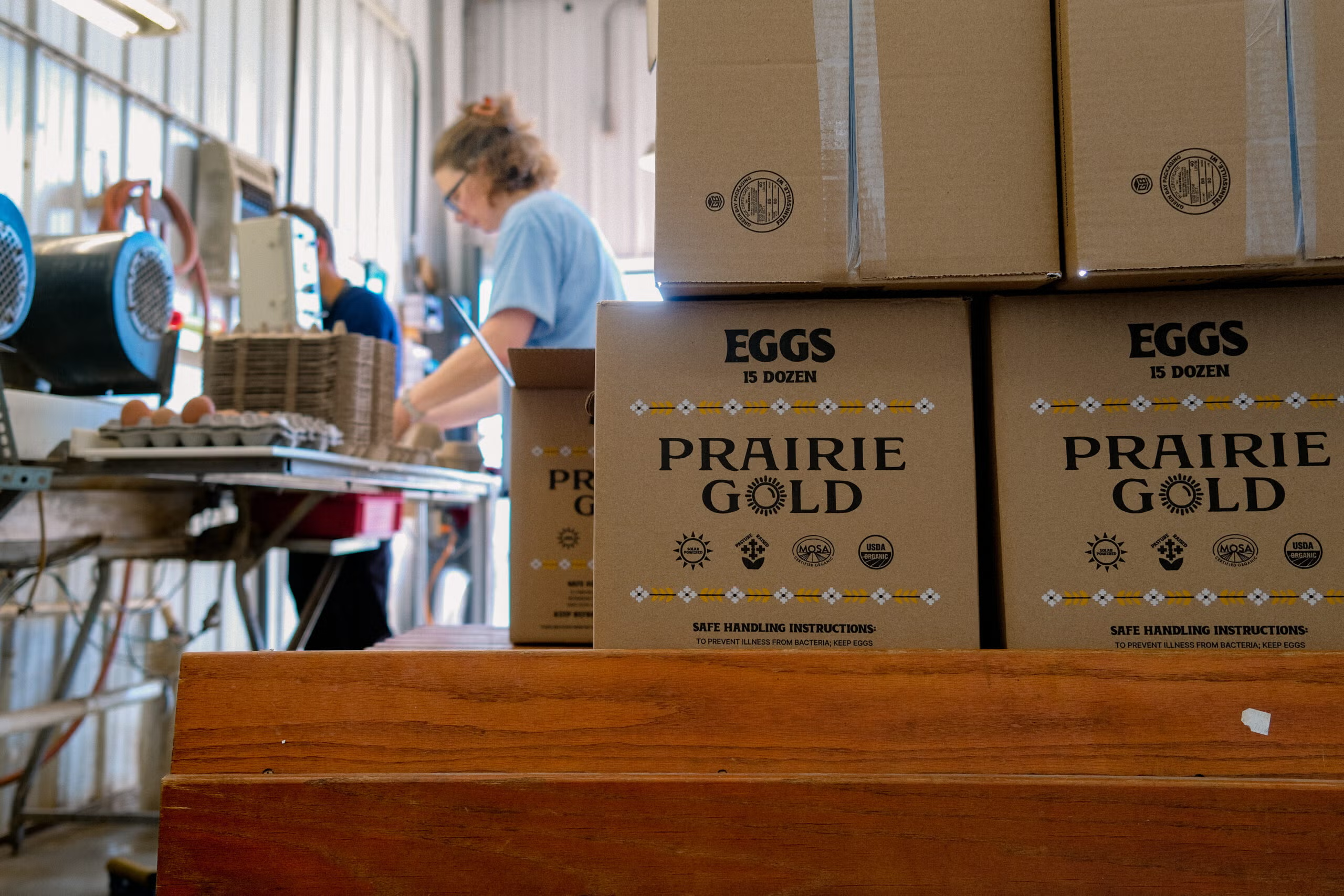
Michael Gutschenritter prides himself on producing what he considers some of the finest eggs in the state at Three Brothers Farm in Oconomowoc. His free-range, organically fed hens lay about 2,500 eggs a day during peak parts of the year.
Together with two other farms, Gutschenritter sells his eggs to grocery stores and restaurants around Wisconsin through his company, Prairie Gold Organics. But he’s always been a little bothered by the fact that most of his customers are people who can afford to pay a premium for their food.
“We produce some of the highest quality protein in Wisconsin, and we’ve always believed that everyone should have access to it,” Gutschenritter told WPR’s “Wisconsin Today.”
A new program created by Hunger Task Force — a Milwaukee food bank — is making Gutschenritter’s eggs available to people who can’t afford high quality, organic eggs. Using a $2.5 million grant from the state Department of Agriculture, Trade and Consumer Protection, Hunger Task Force created the Connecting Farms to Families program this year.
Hunger Task Force buys food from Wisconsin farmers and gives it to local food pantries, meal programs, Tribal nations and other nonprofit organizations.
“Over 150 emergency food organizations in 58 counties across the state are receiving this healthy produce, dairy and proteins from Wisconsin growers and producers,” said Matt King, Hunger Task Force’s chief executive officer. “These are local food assistance organizations, primarily community volunteer-led organizations that are on small budgets, and so this program is really helping them to gain access to this high-quality, nutritious and locally sourced food.”
So far, 250 farms are participating in the program. The state grant covers the first two years of the program, but Hunger Task Force is working on raising money to make the program permanent.
“This is really becoming a core part of our work, and the more that we can direct food-purchasing dollars into our local economy, we believe that that strengthens not only the emergency food system but the food system as a whole,” King said.
Gutschenritter realized that there are often time gaps between grants for programs like this — money becomes available to meet a need, then disappears. So he created a foundation to raise money for those times when funds are scarce, so that the supply of his eggs isn’t disrupted.
“We’re basically trying to get our customers to support the program in order to keep the eggs flowing to Hunger Task Force,” Gutschenritter said.
Of course, Gutschenritter also benefits. Gutschenritter had been looking for new markets for his eggs to keep slowly growing his business. The Connecting Farmers To Families program allows for a substantial expansion.
“Literally 25 percent of our sales are (now) going into the hunger relief efforts. It’s massive, and if this can gain even more momentum, we would be more than happy to grow with it. And I know that other farms are looking for ways to get their food into the hunger relief efforts,” Gutschenritter said. “If Hunger Task Force is able to find more ways to make this happen, I think a lot of farms are going to be able to thrive and stay small to medium without selling out their values.”