


Wisconsin News
State regulators change We Energies’ data center rate proposal to protect customers
State regulators signed off on a first-of-its-kind plan in Wisconsin setting how large data centers served by We Energies will pay for the electricity they use and the infrastructure built to power them.
The Public Service Commission of Wisconsin on Friday unanimously approved a special rate plan for data center-scale customers in We Energies’ service territory. But before doing so, they made a host of modifications to the proposal they said were aimed at protecting other customers.
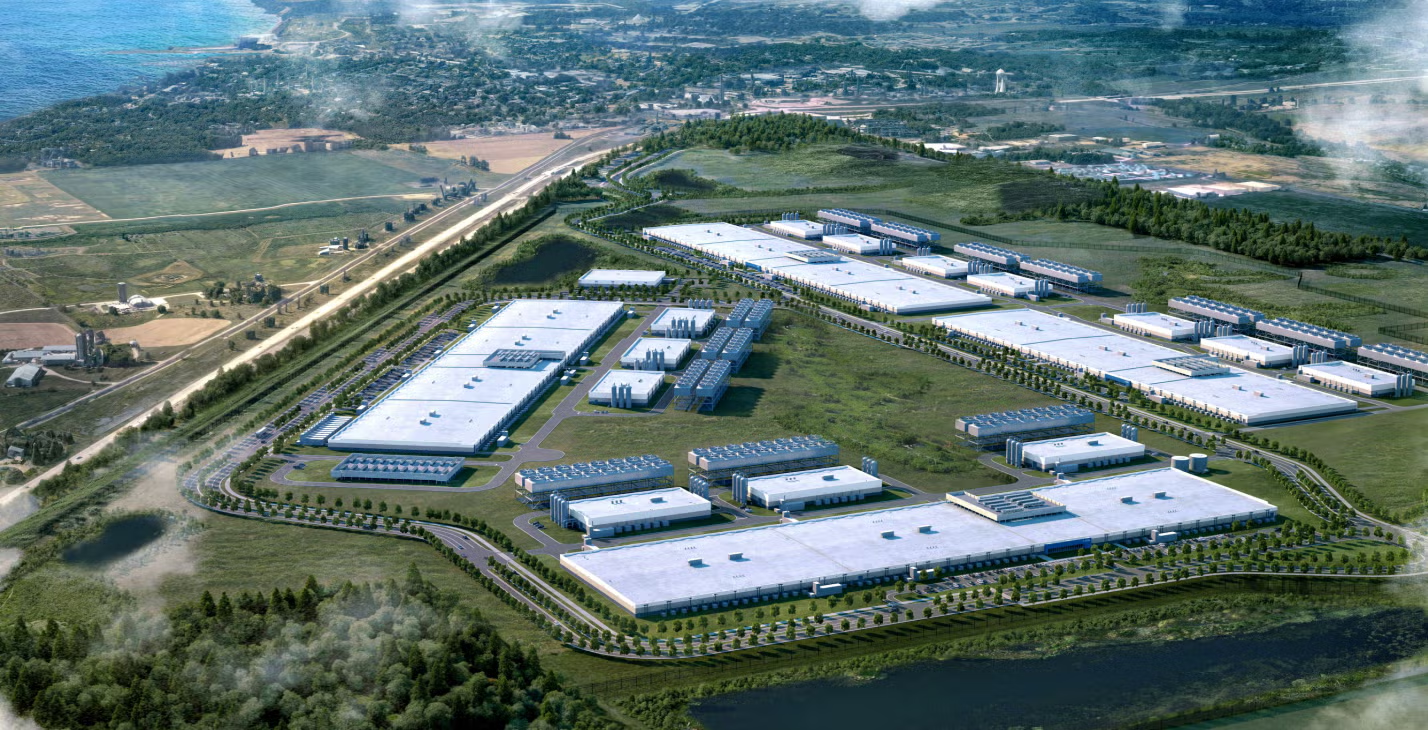
The decision comes as data centers in Mount Pleasant and Port Washington could double We Energies’ energy demand by 2030. The company is preparing to spend $19.3 billion on new electricity generation over five years, according to testimony filed with the PSC.
“The decisions we’re making here today will not be limited to this docket,” said PSC Commissioner Kristy Nieto. “They will shape future proceedings, future investments and the trajectory of the utility system itself.”
Later this spring, the PSC is expected to decide on a similar proposal from Alliant Energy setting rates for Meta’s data center campus in Beaver Dam.
Throughout the more than six-hour meeting, PSC commissioners emphasized their intent to shield residents from paying costs associated with powering data centers. They said the utility’s proposal was in the right direction, but needed more safeguards.
“Existing Wisconsin customers should not pay a single cent to subsidize the service of data centers, or very large customers,” Nieto said. “Not now and not decades from now.”
PSC Chair Summer Strand said denying the special rate plan entirely “would harm existing customers” because it provides protections to non-data center customers that its current large customer rates do not.
The commission’s modifications include extending the length of agreements between data centers and utilities, lowering the energy demand threshold requiring customers to be covered by the plan and removing a subscription model they said posed risks to non-data center customers.
Strand said the changes to the proposal shows the commission has “done as much as possible to protect other customers ” and “increased transparency and visibility into these arrangements.”
We Energies applied for the special electric rates more than one year ago, framing the plan as an effort to shield residential and business customers from costs associated with powering data centers.
But critics have argued the plan didn’t go far enough to protect customers.
Recent analysis from the Sierra Club’s Wisconsin Chapter showed most public comments to the PSC opposed the plan as it was proposed, with many worried about rising electricity costs. PSC officials said more than 2,000 public comments were submitted.
After the meeting, a coalition of energy interest groups praised the commission’s action as being responsive to the public.
Brett Korte, an attorney for the nonprofit Clean Wisconsin, called the commission’s decision “an important and positive moment for the regulation of hyperscale data centers in Wisconsin.”
Tom Content, executive director of the Citizens Utility Board of Wisconsin, said in a statement that the decision signals that commissioners “heard loud and clear that Wisconsinites have significant concerns about energy affordability and AI data centers.”
“How this gets implemented in future rate cases remains to be seen, but customers’ interests are in a better place after the PSC supported critical changes to the utility’s proposal,” he said.
Under the proposal approved by the commission, data center-scale customers would be required to sign a 15-year agreement with the utility to take on electric service under the proposed rate structure and to pay costs tied to serving their demand.
The PSC extended the terms of the agreements from 10 years to 15 to prevent cost-shifting.
The energy demand threshold for a customer to qualify for the rate structure was reduced from 500 megawatts to 100 megawatts, the level at which new generation projects typically require PSC approval. The commission opted to make it mandatory for eligible customers to subscribe.
Very large customers would fund and subscribe to portions of multiple new power generation projects, or entire projects. The commission removed a capacity-only subscription option that would have allowed data centers to cover 75 percent of the costs of certain generating facilities.
“I found the capacity-only option did open the door to a lot of risk and uncertainty as to how it would impact non-(data center) customers,” Strand said.
Commissioners also made changes to the proposal aimed at protecting customers from transmission costs tied to data centers to the extent that they could. Federal regulators ultimately control transmission rates.
“The whole docket exists because the existing rate structures are unable to accommodate the size and speed requirements of these customers, and I believe this applies to all aspects of electric service — including transmission,” said PSC Commissioner Marcus Hawkins. “In proposing the transmission service charge as filed, the applicant assumes that traditional status quo transmission cost allocation would be appropriate and reasonable.”
The data center rate proposal is tied to broader rate cases We Energies and Wisconsin Public Service — both owned by the same parent company — filed this month seeking to overall increase electric rates in 2027 and 2028.
According to projections in that case from April 1, the company expects data centers to cover $5 billion in costs related to new generation projects in 2027 and 2028, as well as cover $1.9 billion in other costs over the two years.
In a statement after the meeting, We Energies spokesperson Brendan Conway said the utility appreciates the commission’s approval, saying the plan “ensures that no costs to serve data centers will be subsidized by, or shifted to, other customers.”
“The Commission’s decision is an important step and underscores the importance of our plan to ensure data centers pay their full share for the power they use in our state,” Conway said. “That is important to us and to the data center companies we are working with.”
Jeff Riles, senior director of energy markets for Microsoft, which is developing the Mount Pleasant data center campus, said in a statement that the company welcomes the commission’s approval of the rate structure.
“Microsoft has always been committed to paying the costs our operations require, and these tariffs give us a clear path to continue investing in the state while living out that commitment to protect other ratepayers,” he stated.
Wisconsin Public Radio, © Copyright 2026, Board of Regents of the University of Wisconsin System and Wisconsin Educational Communications Board.