


Wisconsin News
Trump administration announces $19M in funding to southcentral Wisconsin coal plant
A coal plant in southcentral Wisconsin is expected to receive $19 million in federal funding for a modernization project after the plant was originally scheduled to retire almost two years ago.
The Trump administration announced plans this week to provide up to $500 million in funding to coal-fired power plants in 10 states, along with an export terminal in California. The funding will come from the Defense Production Act, a Cold War-era law that gives the president power over national security-related industries.
Columbia Energy Center, a coal-fired plant co-owned by Alliant Energy, Madison Gas and Electric and Wisconsin Public Service, is one of the plants expected to receive the funding.
Environmental groups have criticized the move, saying coal is the most expensive source of energy and contributes to climate change and toxic air pollution.
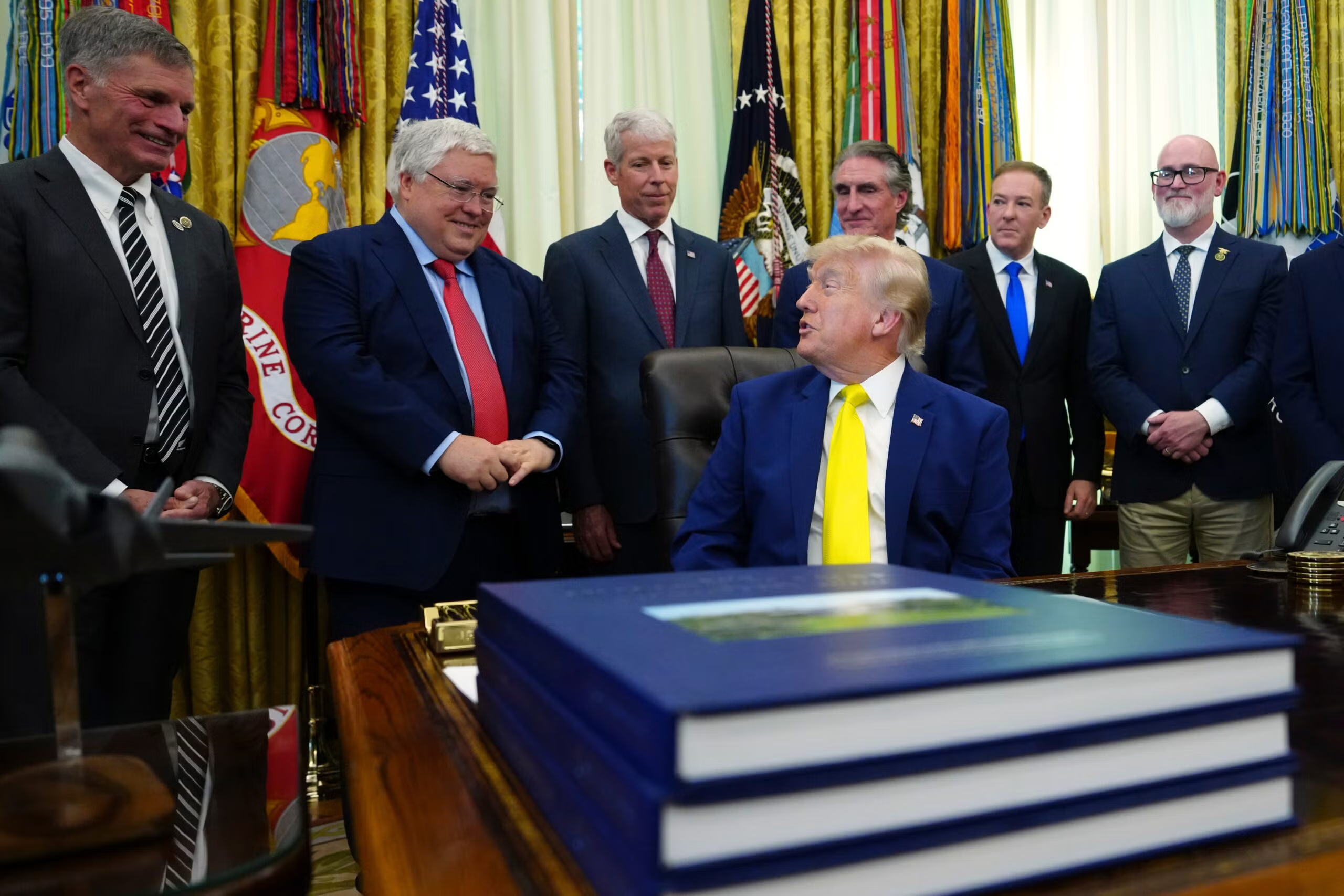
Speaking in the Oval Office on Thursday, President Donald Trump said the Defense Production Act would be used to “save” coal plants in Wisconsin, West Virginia, Kentucky, North Carolina, Indiana, Tennessee, Arizona, Arkansas, Oklahoma and North Dakota.
“Our action will allow these facilities to invest in upgrades that will extend their operational lives for decades into the future, reinforce the reliability of our electric grid, which is really the biggest beneficiary, and most importantly, keep electricity prices very low for the American people,” Trump said.
During the press conference, administration officials said they planned to spend roughly $700 million to boost the coal industry more broadly, including plans to support 42 coal mines and build two new coal plants. They said those federal dollars would be matched by $1.7 billion in private investment.
The U.S. Department of Energy listed Columbia Energy Center in Columbia County as one of the beneficiaries. It is expected to receive $19 million from the federal government to help fund $48.5 million in upgrades.
“This initiative will maintain dependable baseload service and enhance the efficiency and environmental performance of the existing units,” a description from the agency reads.
The plant has more than 1 gigawatt of capacity.
The Columbia Energy Center was originally set to shut down by the end of 2024. But its retirement was pushed back first to 2026 and then to 2029.
On behalf of the co-owners, Alliant Energy submitted a grant application to a federal coal modernization program in December.
An Alliant Energy spokesperson said in a statement the utility saw the application as an opportunity to “cost-effectively” modernize the plant and lower the cost of planned reliability and safety upgrades.
The spokesperson also said the project would help the utility continue providing work for around 100 union workers at the plant.
The company didn’t respond to a question asking how long it planned to continue using the Columbia facility as a fossil fuel-burning power plant.
Tom Content, executive director of the Citizens Utility Board of Wisconsin, said the Trump administration’s announcement this week is a shift in how it has looked to support the coal industry.
Last year, Trump ordered coal plants set to shut down in Michigan and Indiana to continue operations, Content said.
“The cost for those Indiana (and) Michigan plants are being spread across the Midwest, including to Wisconsin customers, and that’s obviously a concern,” he said. “Wisconsin customers are paying millions and millions of dollars just for coal plants in other states. This grant funding is definitely a different approach.”
Jadine Sonoda, campaign coordinator for the Sierra Club’s Wisconsin Chapter, said it was “disappointing” to see Alliant Energy and the federal government boost coal.
“It is ridiculous to see President Trump basically saying we need to keep these coal plants open,” she said. “It’s ridiculous to see these utilities pursuing this, given what we know about how much cheaper and safer and reliable clean energy is.”
Aside from the Columbia County coal plant, Alliant Energy also plans to eventually convert its coal-fired Edgewater Generating Station in Sheboygan County into a natural gas power plant.
Sonoda also said it’s “a huge problem” that the utility “won’t commit” to an end date for using coal and natural gas because continuing to use them will worsen the effects of climate change.
“They need to transition away from fossil fuels,” Sonoda said. “They need to be clear that they’re not going to be doing that with gas because it’s just another fossil fuel. Until they do that, we’re not going to have anybody satisfied with the way that they’re behaving.”
Wisconsin Public Radio, © Copyright 2026, Board of Regents of the University of Wisconsin System and Wisconsin Educational Communications Board.