


Wisconsin News
Wisconsin creator of ‘John Wick’ brings international crime to small-town Midwest in ‘Normal’
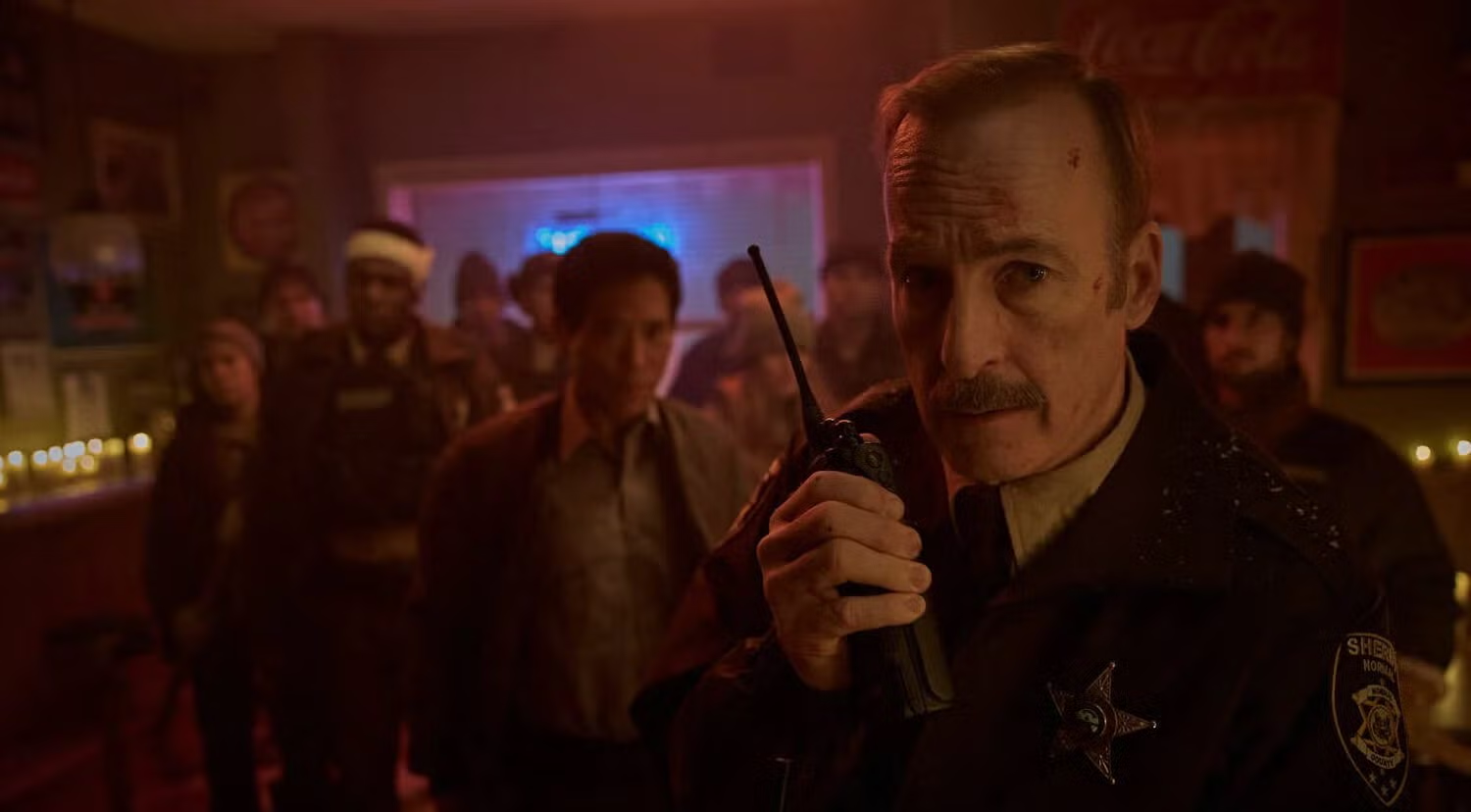
Derek Kolstad will be coming home to Madison for the Wisconsin Film Festival On April 11, for a screening of ‘Normal’ followed by a Q&A
Originally seen on Wisconsin Public Radio, © Copyright 2026, Board of Regents of the University of Wisconsin System and Wisconsin Educational Communications Board.
In between the bloody brawls and shootouts, Madison native and Hollywood screenwriter Derek Kolstad likes to throw a bit of his Midwestern roots into his movies.
His hit action franchise “John Wick” is named after his Wisconsin grandfather, who lived in Mazomanie. “Nobody 2” takes place in a fictional version of the Wisconsin Dells. And his newest movie takes place in the snowy Midwestern town of Normal, Minnesota.
“Normal” follows an interim sheriff — played by Bob Odenkirk — as he stumbles across a major international conspiracy in his temporary town and finds out that everyone there is armed to the teeth. The idea was inspired by what Kolstad saw driving across rural Wisconsin.
“You always drive by that one yarn barn or antique store, and you’re like, ‘How is that still in business?’” Kolstad told WPR’s “Wisconsin Today.” “And you wonder if there’s some kind of illicit criminal empire behind that old lady (with) the horn rimmed glasses.”
Kolstad will be coming home to Madison for the Wisconsin Film Festival on April 11 for a screening of “Normal” followed by a Q&A.
He joined “Wisconsin Today” for a look at the new movie and to talk about his journey to success as a screenwriter.
This interview has been edited for brevity and clarity.
Rob Ferrett: Tell us about your journey from Madison to Hollywood.
Derek Kolstad: When I was a little kid, I loved to read, and attached to the hip was movies. I’m 51, so I’m a child of the 80s. I didn’t watch a lot of TV, but I watched every movie I could. And a definitive moment for me was late at night, our PBS channel 21 used to play uncut, R-rated noir from the 50s, 60s and 70s. So I saw movies like “The Spy Who Came in from the Cold” way too young. But my parents always encouraged me in my love of movies and love of books. I wrote my first screenplay when I was 11 or 12 on a series of yellow notepads. My mom gave me notes, which I thought were really cruel. I found them later and realized, no, mom was being very, very sweet and very, very comforting and encouraging.

RF: What was that first screenplay like?
DK: I don’t really remember the story. It’s always been an action-thriller type thing. But the thing about writing is some people find their voice right out of the gate. And it took me a while. Hollywood at the time was like going to Mars, pre-internet. Even now, it’s a long way away.
I went to the family company after college, then went to Chicago to work for Dale Carnegie — (he wrote) “How to Win Friends and Influence People.” And my little brother called me one day and asked me how I was doing, and I just started crying because I knew I had to come out (to Hollywood) and fail at this. You’re always ready for failure, you’re never ready for success. And so I drove out here in ‘99 or 2000 and slept on a friend from kindergarten’s couch for two years. And I was a 15-year overnight success.
RF: When you write a fight sequence, how much roadmap do you give the director and the other people working on that scene?
DK: I love looking at an action sequence like a three act structure. In work with Bob Odenkirk, we always clicked (because) he looked at action sequences as a sketch comedy. They’re the same length and they have the same heartbeat. And so I’ll often describe the first one to five moves or strikes or kills really detailed. But then the second act, in the middle, I just kind of say, “He’s a whirling dervish of death and destruction;” “He gives as good as he gets;” “Death by a thousand cuts.” Things that in your mind’s eye, you begin to kind of sing along with. And then you end with an exclamation point.

RF: What was it that made you want to bring action back to a Midwest setting?
DK: I love the movie “Bad Day at Blackrock.” And so that’s where the idea began. (I like) the whole idea that there was a secret, and that you think one person is in on it only to realize that, nope, everyone’s in on it.
(The Midwest) is where all of my family and my extended family is from … I have a special love for those little hole-in-the-wall diners where every farmer shows up at 5 o’clock in the morning to get their usual. Everything I do is a love letter to the movies that came before me, but this is a little bit of a nostalgia for when I visit Uncle Russ, where we go and eat and where we drive around. It’s Normal.
