


Wisconsin News
Wisconsin DOJ sues Kalshi, other prediction markets for illegal online sports betting
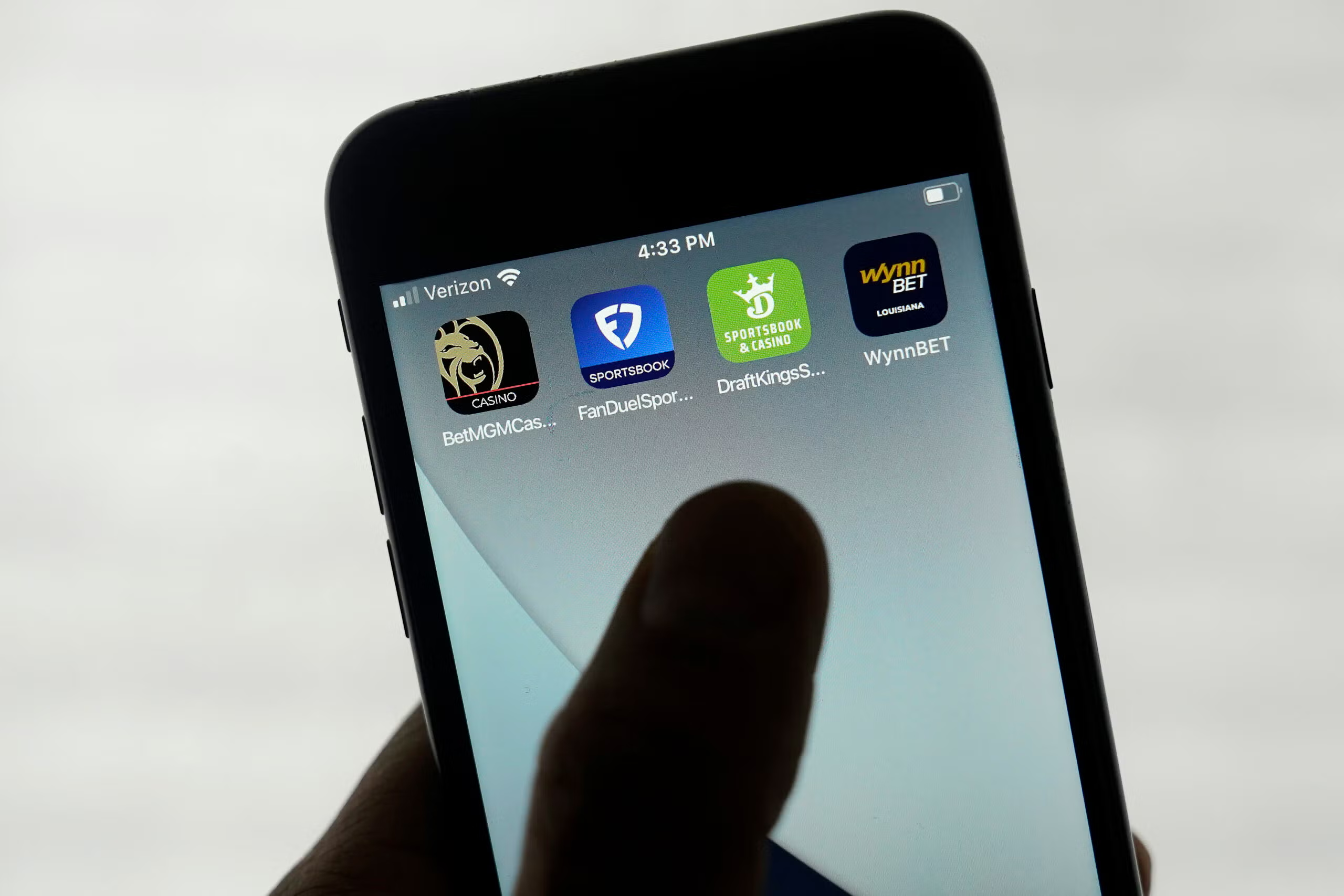
Wisconsin is suing Kalshi, Robinhood, Coinbase, Polymarket and Crypto.com for allegedly illegally facilitating sports betting on their prediction market platforms, the state’s Department of Justice announced this week.
The online gambling apps use contracts that can be bought and sold to pay out money to users based on real world events, from the 2028 U.S. presidential election to the next Superbowl championship.
“These companies have chosen to flout Wisconsin law by thinly disguising the sports betting that they facilitate through what are called event contracts,” Attorney General Josh Kaul said during a press conference announcing the litigation Thursday.
The lawsuits liken the platforms to operators of “an illicit poker game” who “take a cut of each pot.”
Almost all sports betting and other forms of gambling are illegal in Wisconsin with exceptions for some tribal operations. Though the companies do not take a cut of bets customers make, the complaints allege they generate “significant revenue” by charging transaction fees for each contract trade.
Around 90 percent of Kalshi’s revenue comes from sports contracts which reportedly generate more than $1 billion each year.
“No company is above this law, no matter how creatively those companies try to disguise the activity that they’re engaged in,” Kaul said.
The state wants the apps to be declared public nuisances and a permanent injunction stopping them from making sports event contracts.
Kalshi, Robinhood, Polymarket, Crypto.com and Coinbase allowed Wisconsin residents to put money on outcomes of the recent NCAA March Madness Tournament — including the Final Four game, the complaints allege.
“And for every bet made, these companies collect a fee akin to a casino’s rake at a poker table,” the document says.
Robinhood and Coinbase offer event contracts that can be traded between buyers and sellers using Kalshi’s prediction market app or website. It’s a tactic that the lawsuit argues is “indistinguishable from an ordinary sports bet.”
A spokesperson for Robinhood told WPR in a written statement that their event contracts are “federally regulated by the CFTC (Commodity Futures Trading Commission),” adding that the company intends to defend themselves against the claims.
A statement from Kalshi argued something similar. They said because the platform is a “regulated, nationwide exchange for real-world events,” therefore it is subject exclusively to “federal jurisdiction.” Kalshi claims it is very different from what “state-regulated sportsbooks and casinos” do.
The Ho-Chunk Nation filed a similar lawsuit against Kalshi in August 2025, alleging that the company was breaking state, federal and tribal laws by allowing Wisconsinites to place money on sports outcomes. The case is ongoing with a trial set for May 2027.
Earlier this month, Gov. Tony Evers signed a bill to make sports betting legal in Wisconsin, but only on computer servers located on tribal land. It was supported by all 11 recognized Native American tribes in the state.
Coinbase, Polymarket and Crypto.com did not immediately respond to WPR’s request for comment.
Wisconsin Public Radio, © Copyright 2026, Board of Regents of the University of Wisconsin System and Wisconsin Educational Communications Board.