

Wisconsin News
Wisconsin’s prison population hits a record high
By Evan Casey
There’s a record number of people serving time in Wisconsin prisons, according to the latest state data.
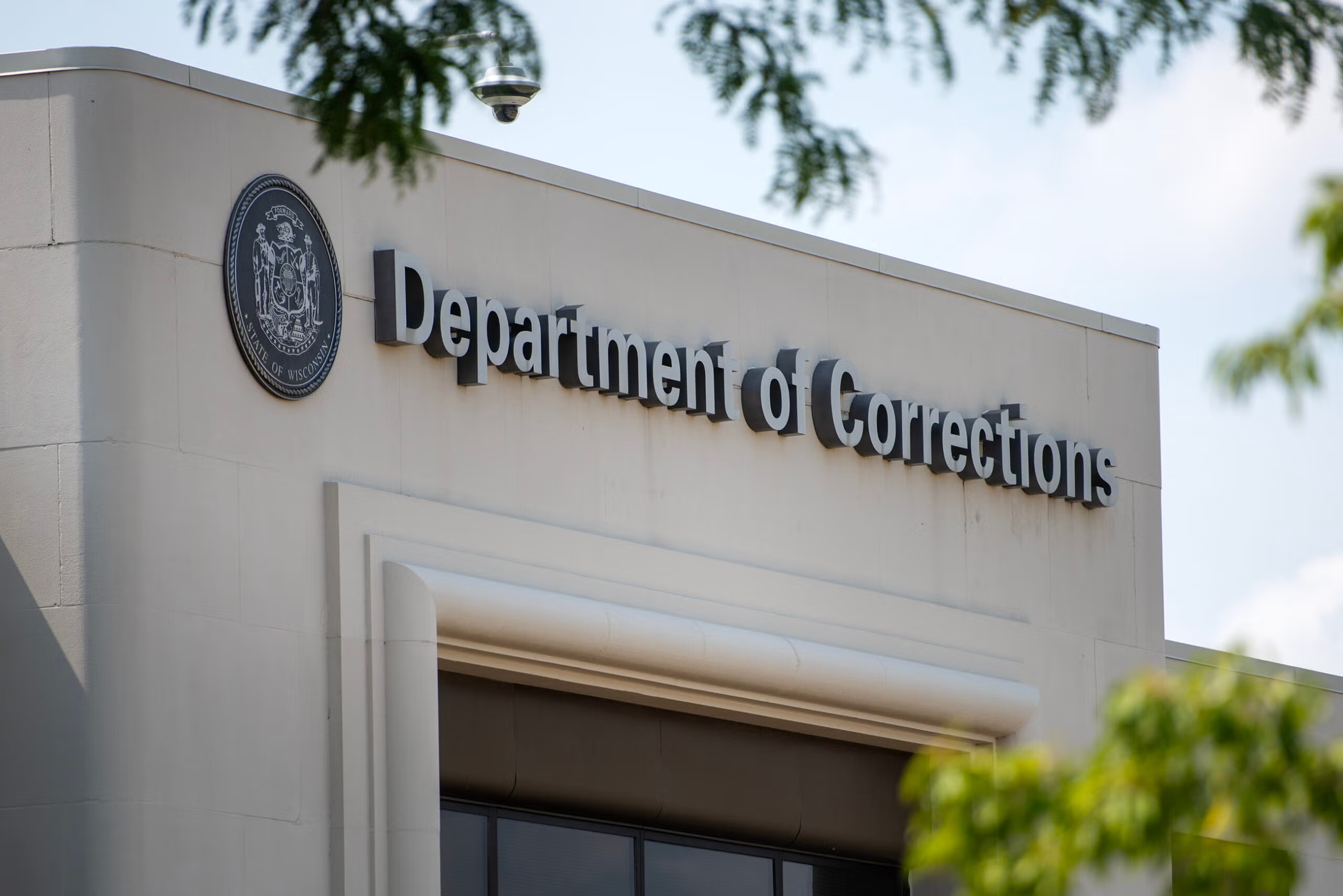
The state’s prison population is at 23,854, according to numbers released Friday by the Wisconsin Department of Corrections. The state’s adult institutions are designed to have a capacity of 17,867 people.
The prior record was set in 2019, according to Wisconsin Watch, which was also the first to report on the new state record Friday.
Marianne Oleson, the co-director of Ex-Incarcerated People Organizing, or EXPO, said the news “hit hard.”
“For EXPO, 23,854 people is not just a record — those are human beings, thousands of families, and a corrections system stretched beyond what it was designed to handle,” Oleson said.
Mark Rice, the transformational justice campaign coordinator with the criminal justice reform group WISDOM, called the record “unacceptable.” Rice said WISDOM and activists with other organizations across the state have been working to reduce the prison population for decades.
“It’s extremely frustrating to me that Wisconsin is now going in the opposite direction, actually increasing the prison population,” Rice said. “It’s creating a severe overcrowding crisis in Wisconsin prisons.”
The state’s average daily prison population count in 1990 was at 7,333, according to a Wisconsin Policy Forum report.
Gov. Tony Evers, who is serving his last term as governor, campaigned on reducing the prison population.
In response to a request for comment on growth in the prison census despite that intention, Evers’ spokesperson Britt Cudaback responded with an email pointing “to the governor’s eight years of budget requests to reform our state’s justice system, the vast majority of which were rejected by the Wisconsin State Legislature.”
In regards to overcrowding, Wisconsin Department of Corrections spokesperson Beth Hardtke said, “We would again remind you of this administration’s efforts to address the prison population through the realignment plan.”
“The governor’s corrections proposal would have paved the way for much-needed facilities upgrades and expanded programming to address many of the challenges we face today,” Hardtke wrote in an email. “Unfortunately, the legislature did not fully fund the plan and only provided $15 million for planning.”
Rice, who was once incarcerated himself, said overcrowding at prisons can lead to delays in healthcare or mental healthcare access.
“Many people who are incarcerated are already struggling with mental health problems and (it) can create tension within the facility,” Rice said.
Alexandria Staubach, policy analyst for Wisconsin Justice Initiative, said overcrowding is a “significant issue.” She said it can also stress out the staff working at the facilities.
“It stresses the individual who’s incarcerated, of course, but it also stresses the deputies that are in charge and everyone else that works in these facilities,” Staubach said. “It’s not good for anyone.”
Oleson said there are more reforms needed to drive down the number of people serving time in prisons.
“We have to address the policies driving incarceration,” Oleson said, mentioning the Wisconsin’s Truth in Sentencing laws. Those laws mean “any person who commits a felony offense on or after Dec. 31, 1999, and is sentenced to at least one year in prison will not be eligible for parole,” according to a Wisconsin DOC webpage.
“They are generally required to serve the entire sentence imposed by the Court, with some exceptions for early release,” the webpage says. “Offenders who violate prison rules may have additional days added to the confinement portion of their sentence.”
Oleson said she believes a person’s sentence should “hold someone accountable, but it should also recognize rehabilitation, growth, and demonstrated change.”
“Keeping someone incarcerated simply because the calendar says so is not increasing public safety,” she said.
Rice also said he’d like to see more funding in the state budget for things like programs aimed at upstream diversion and “earned release opportunities.”
“There’s a lot that can be accomplished through the next state budget,” Rice said.
Wisconsin Public Radio, © Copyright 2026, Board of Regents of the University of Wisconsin System and Wisconsin Educational Communications Board.