


Wisconsin News
100 homes in 100 days: Menasha volunteers to fix tornado damage before winter
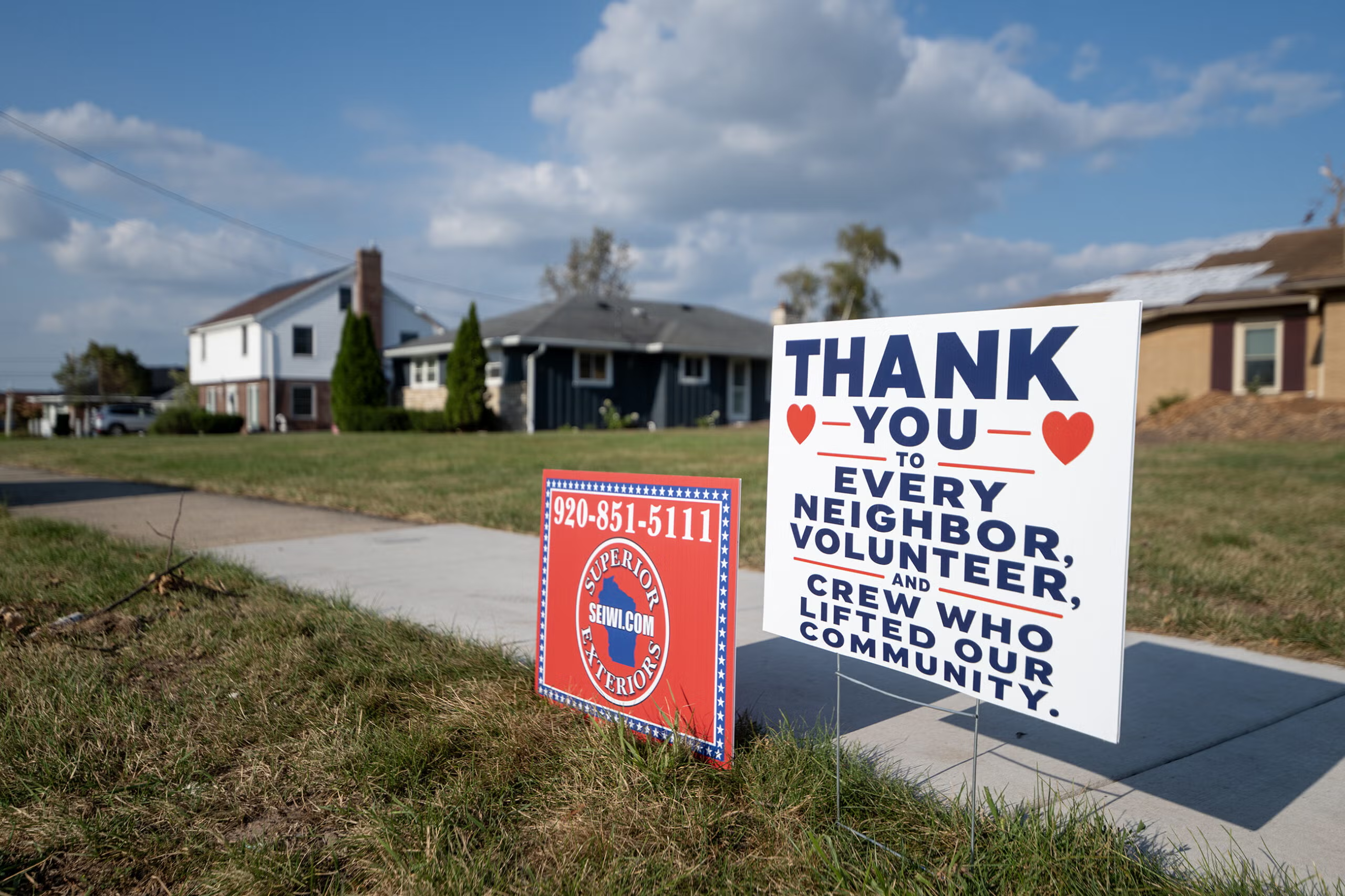
Habitat for Humanity is leading the effort, focused on uninsured and under-insured homeowners
A coalition of local businesses and volunteers headed by Habitat for Humanity is planning to fix 100 homes in 100 days in Menasha — aiming to complete repairs before families in those houses have to face a Wisconsin winter.
Organizers call it the “Tornado Rock the Block 100.” The program is focused on helping those who are uninsured or under-insured get their roofs, windows and doors fixed before snowfall.
Homeowners who may qualify for the program can find the registration process on the Greater Fox Cities Area Habitat for Humanity website. The program is available to homeowners making up to 120 percent of the area’s median income.
At a press conference Tuesday in Menasha, a small crowd gathered to announce the program at a pavilion in Jefferson Park — near some very hard hit homes.
One of them was Christa Ball, who sat quietly watching the press conference.
“That’s a pretty big effort,” Ball said of the 100 homes goal. “I sure hope I’m one of those people, so I can be in my house.”
Ball had lived in her home for 25 years, with her dogs, before the tornado hit.
“It was perfect for us,” Ball said.
Ball had two roommates — all over the age of 80 — and her partner was in the garage when the tornado hit.
The garage came down on him, breaking his ribs and causing other injuries, Ball said. The other roommate wasn’t in the house when the tornado struck, and is now in a nursing home.
“These are the final years of their life. I want to get back in there, you know, and start living again,” Ball said.
The dogs have been farmed out to other people until she can get on her feet, and Ball said it’s been terribly difficult.
“I miss them dearly, and they’re so close to our heart,” she said.
But she hasn’t given up hope of moving back into her house and bringing them home. She said she’s already had a structural engineer look over the home. They found the bones of the house are sound.
However, all the walls and windows and even the roof need significant repairs, Ball said.
The local leaders who gathered to show their support for the program benefiting people like Ball said they believe there are ways to help everyone.
“On July 27, the way in which our community looks changed substantially,” Menasha Mayor Austin Hammond said during the press conference. “However, the character of our community did not.”
Habitat for Humanity says many of the people they’re helping do not have funds to pay for the house repairs themselves — or the damage to their homes is so extensive insurance doesn’t cover it all.
Hammond thanked donors and businesses for all their work to provide funding as costs for repairs mount up.
“In 100 days, 100 families throughout our community’s lives are going to be positively impacted because of Habitat for Humanity, and because of those who are willing to so generously give to make sure that our community is taken care of,” Hammond said.
John Weyenberg, CEO of Greater Fox Cities Area Habitat for Humanity, said they know there is much more work to be done. The 100 homes program is only the first step, to help some of the hardest hit.
“There are hundreds, in fact, nearing 2,000 households who have been impacted in some way,” Weyenberg said.
He said the repair needs stretch from homes with minor damage to complete losses. Weyenberg added his organization has already cleaned up over 400 households in the last couple of weeks.
That’s promising news to Ball, who said she has no idea how much the final cost of repairs could be.
“I know the insurance company didn’t give me enough money,” Ball said. “They’re not even going to cover it. I mean, just a fraction of what it’s going to cost.”
Amy McGowan, the VP of Philanthropy for Fox Cities Habitat for Humanity, said the work on the 100 homes project is focused on elder residents without savings accounts, working families with children and others who can’t pay up to $30,000 out of pocket to fix a roof.
“We don’t know anything about (the federal response) yet,” McGowan said. “But if that comes through, we want to ensure that this philanthropy will help to fill that gap.”
McGowan said the organization is working on ways to create zero-percent interest loans to help people rebuild, with payment not due until the family decides to sell their home.
Ball said she is determined to get back home, with whatever help she can find.
“We’re not just going to let it go,” Ball said. “We want our houses fixed, and we love the neighborhood.”
Wisconsin Public Radio, © Copyright 2026, Board of Regents of the University of Wisconsin System and Wisconsin Educational Communications Board.