

Wisconsin News
Amtrak extension to Madison on track with $218M in federal funds
Hiawatha West project would extend Chicago-Milwaukee passenger rail service to Waukesha, Jefferson, Dane counties
By Hope Kirwan
A project to connect Madison and Milwaukee through passenger rail service has secured the majority of funding it will need.
Democratic U.S. Sen. Tammy Baldwin and Gov. Tony Evers announced Friday that a Federal Railroad Administration program would provide more than $218 million for the final design and construction of Amtrak’s Hiawatha West project.
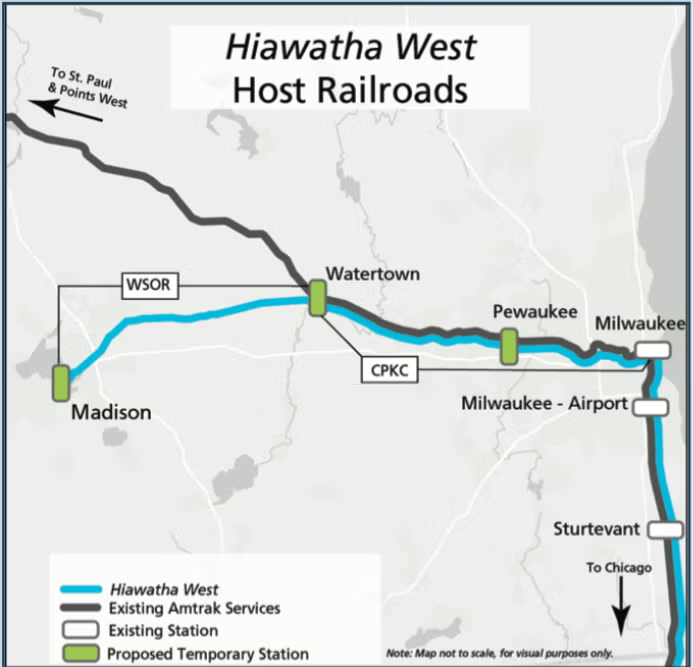
The project could expand on Amtrak’s existing Hiawatha line from Chicago to Milwaukee, adding stops in Pewaukee, Watertown and Madison.
The Hiawatha line is already one of the busiest Amtrak routes in the country, recording more than 681,000 passenger trips last year. Expanding the service is expected to add 260,000 trips to that number, while generating $46 million in annual economic benefits.
In a press release, Baldwin said the project would also improve the freight rail service that is critical to farmers and manufacturers, providing “reliability and confidence that their products are getting in the hands of customers on time.”
Evers said in a statement that the project is a “win-win for Wisconsin,” by providing new transportation options for residents and creating 200 permanent jobs in the state.
Amtrak has estimated the total cost of the Hiawatha West project could run up to $275 million. The company previously said the federal government would pick up 80 percent of the project costs, while state and local partners would need to cover 20 percent.
Madison lost its passenger rail service in the 1970s. A high-speed rail project was slated to connect Madison and Milwaukee during former President Barack Obama’s administration. But the project fell apart after Republican former Gov. Scott Walker rejected more than $800 million in federal funding.
Read more about about Wisconsin’s history with high-speed rail lines from WPR’S podcast “Derailed.“
Wisconsin Public Radio, © Copyright 2026, Board of Regents of the University of Wisconsin System and Wisconsin Educational Communications Board.