


Wisconsin News
Enjoy fall weather? So do ticks, scientists warn
By Hope Kirwan
The cooler temperatures and changing leaves of fall draw many Wisconsinites outside.
But experts warn autumn also brings a surge in tick activity and the risk of Lyme disease.
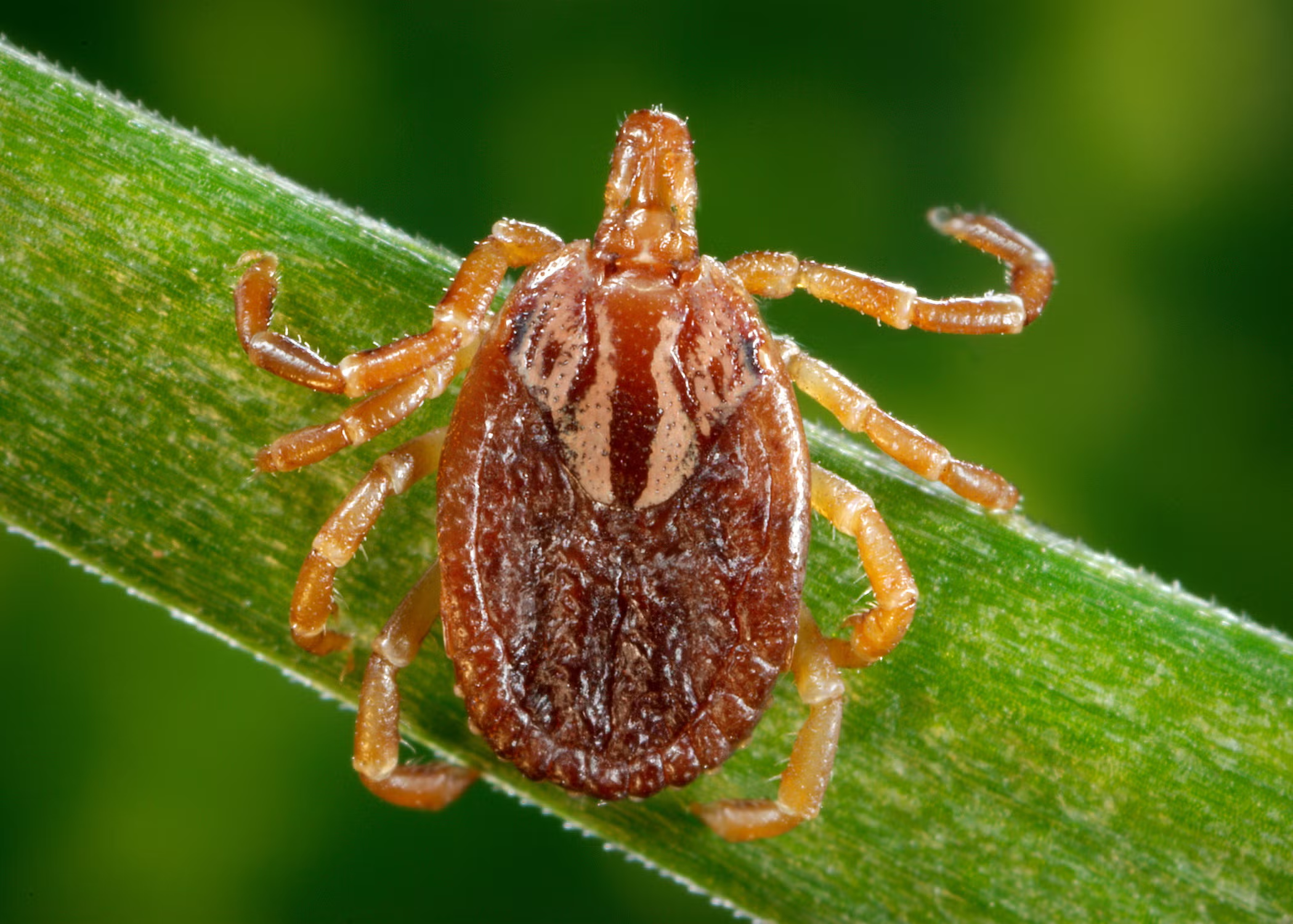
Deer ticks, also called blacklegged ticks, are active from early spring to late fall. After initially peaking around May, the tick population sees a second peak in October.
Alexandra Linz, staff scientist at Marshfield Clinic Research Institute, said this follows the tick’s lifecycle.
“It tends to be specifically the adult deer ticks that come out in the fall, which fortunately are a bit larger and easier to find than the younger stages, but they’re still super tiny,” she said.
Nearly all illnesses spread by ticks in Wisconsin are caused by the deer tick, according to the Wisconsin Department of Health Services.
Cases of Lyme disease, a bacterial infection most commonly associated with tick bites, have been increasing in Wisconsin for the past five years. They hit a record high of 8,929 cases in 2025, in part due to newly automated reporting.
State data show most cases of Lyme disease occur during June and July. But emergency room visits related to tick bites tend to see a second, smaller peak in October.
Linz helps lead Marshfield Clinic’s Tick Inventory Citizen Science Project, which asks Wisconsinites to mail in the ticks they find in order to inventory the species and diseases they are carrying.
A study of the project data found that in 2024, there was a higher prevalence of the bacteria that causes Lyme disease in ticks submitted during the fall compared to the spring peak.
“With only one year of data, we can only see so much,” Linz said. “But it did suggest that (people should) definitely keep an eye out for ticks that carry Lyme disease in the fall.”
Of the 707 adult female deer ticks tested in the study, 51 percent carried the Lyme-causing bacteria.
Warm temperatures in early spring caused an early surge in tick bite-related ER visits, both in Wisconsin and across the country. The Centers for Disease Control and Prevention issued an alert in late April warning about the spike and urging the public to protect themselves.
As vegetation dies back in the fall, Linz said ticks are still waiting in tall grass and bushy areas to hitch a ride on humans or dogs. She encouraged people to stay vigilant with doing tick checks after spending time outdoors.
Wisconsin Public Radio, © Copyright 2026, Board of Regents of the University of Wisconsin System and Wisconsin Educational Communications Board.