


Wisconsin News
Former lawmaker, ER doctor Erik Severson says property taxes, not legal marijuana, should top Senate agenda
August 4, 2026
The Republican primary for Wisconsin’s soon-to-be-open 25th Senate District seat features two former Assembly members: Angie Sapik of Lake Nebagamon, who represented the 73rd Assembly District from 2023 to 2025, and Erik Severson of Horse Creek, who served from 2011 to 2015 representing the 28th.
The reshuffling of candidates, with the vacancy in the 25th District the result of Republican state Sen. Romaine Quinn now running in the neighboring 23rd District, comes after party swings from the redrawing of legislative maps in 2011 and again last year.
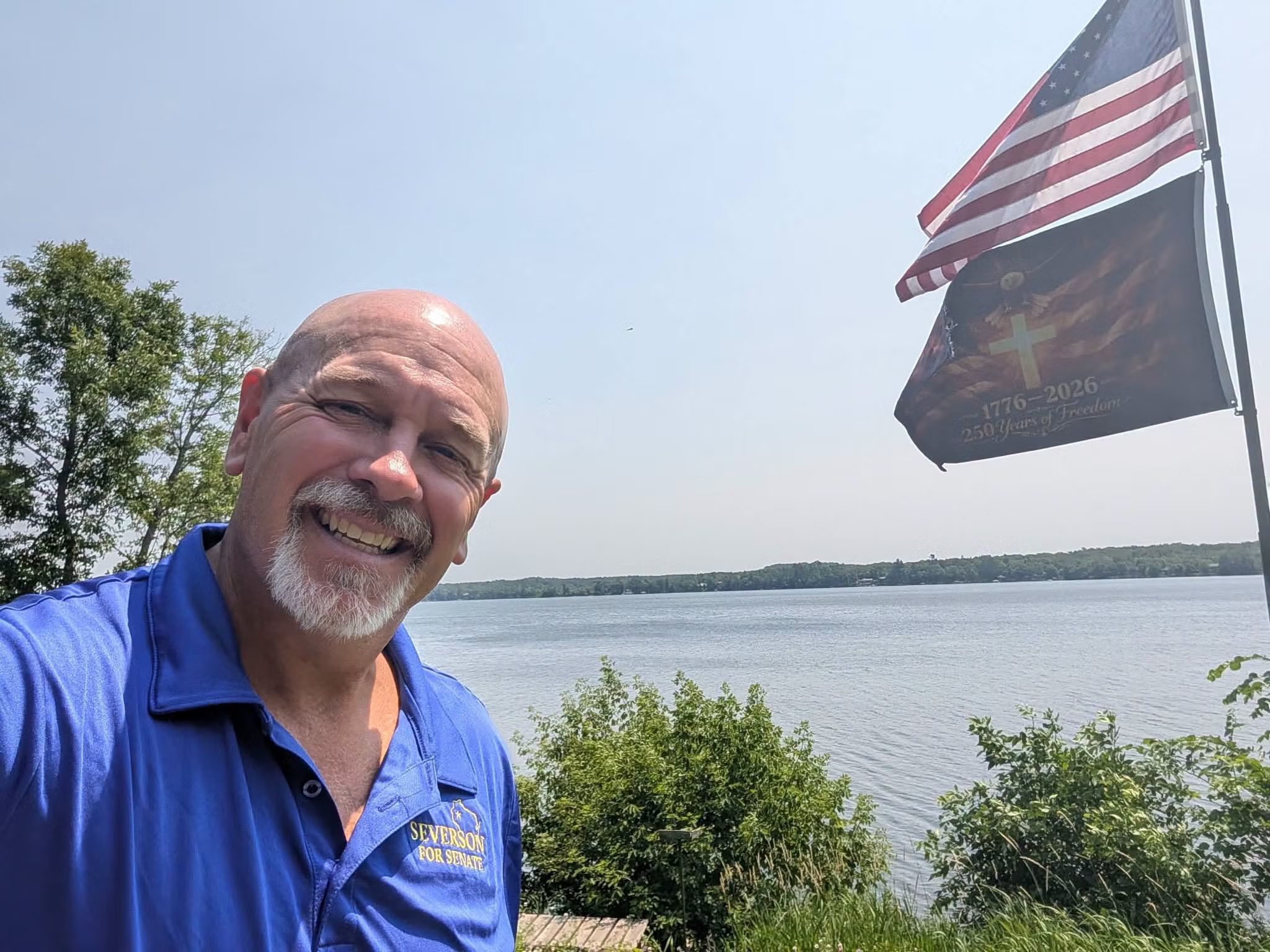
A graduate of the Mayo Medical School in Rochester, Minnesota and an emergency room physician in Osceola, Severson stated as his top priority reversing a school funding provision enacted by Gov. Tony Evers that Republicans charge will result in property tax increases for 400 years.
“We just have to overturn that immediately upon getting elected here into the Senate,” he said. “People who are on fixed incomes can’t afford to have their property taxes going up for the rest of their life”.
Severson and his wife, Katie, have three children. He spoke with WPR’s Robin Washington on “Morning Edition” about issues facing the state.
The following interview has been edited for brevity and clarity.
Robin Washington: The 25th District borders two of the three neighboring states of Wisconsin where marijuana is legal. That means residents are literally driving across our roads to spend money at dispensaries on the border. Should Wisconsin stem this outflow of cash and legalize pot or take a lesser action such as allowing medicinal use?
Erik Severson: We have to do a lot more research into what marijuana does. For a long time, this has been one of the scheduled medications so there hasn’t been any testing done on it. We know at what level a person’s blood alcohol can be at which they can legally drive. We don’t really understand that at all about marijuana.
In the first 10 years that I worked as a doctor, I saw schizophrenia less than five times. Now, since people started using a lot more marijuana, I’m seeing a lot more schizophrenia. And there have been studies that have come out to show that this is connected directly to marijuana use. I don’t think we should just be jumping in and saying, “Hey, this is a good thing because we can make money off of it.” This has long-term health consequences to people’s lives.
RW: During Superior Days, the city of Superior has lobbied to the state for a food and beverage tax similar to that across the border in Duluth to help fund an exhibition center that can capture state conventions that are currently too large for the city. Do you support this effort?
ES: I don’t actually know exactly what they’re doing in Duluth. It’s always good to have tax decreases that would make things less expensive for businesses. But if this is a tax increase for people to have to pay higher taxes for their food so that they can build a building — no, I don’t think I would support that.
RW: The city of Port Washington is embroiled in the controversy over a planned AI data center with concerns about land and water use. The city of Superior and others have enacted moratoriums on creating new centers. Would you seek a statewide moratorium? If so, how long should it last?
ES: Honestly, I don’t think anybody knows all the answers about data centers. I think it comes down to two main questions: One, where is all the electricity going to come from? Who’s paying for it? If you’ve got to build a whole new power plant to get the electricity to these data centers, and building that causes the other customers to pay higher rates for electricity, then I just can’t see how that is helping anyone. I would be completely against that.
The other aspect of all this needs to be cooled down. And if they’re heating up a lot of water and dumping it into rivers or lakes that are killing all the fish, then obviously, I think everyone’s against that. My gut right now would tell me no on having these data centers. But I want to have a lot more information.
RW: Whether data centers are built or not, AI isn’t going anywhere. AI engines like ChatGPT are notorious for giving wrong information, which the industry calls hallucinations — like citing court cases or books that don’t exist. Should companies be held liable when their creations cause harm by providing patently false information?
ES: Yes. That’s actually something that really should be looked into. If AI is creating harm, then that’s exactly where the government should be stepping in. We should be protecting people’s life, liberty, and property. The government should be saying, “Hey, the thing that you have developed is doing things that are illegal. You’re going to have to be responsible for that.”
RW: A scarcity of defense lawyers in the region means people can be jailed awaiting trial because there’s no one to represent them, as is guaranteed by law. Would you be in favor of increased funding for defense lawyers? And if so, what would you cut?
ES: If we were going to have more defense lawyers, we might have to actually fund them higher. But we also have to look and ask why do we not have enough defense lawyers? Is it because of the pay? Or is it because it’s just the way the system is set up?
I think that maybe we do need to fund that in a different way. I think that also we should be looking into fraud in the state of Wisconsin. I think we could find a lot of money there. We all know the stories of what happened in Minnesota over the last couple of years with fraud. If (Republican) Tom Tiffany becomes governor, we will be auditing every single department of the state, and we could have a lot of money that we could use in many different ways, including giving it back to the people.
Wisconsin Public Radio, © Copyright 2026, Board of Regents of the University of Wisconsin System and Wisconsin Educational Communications Board.