


Lisle Lester, born Sophia Walker
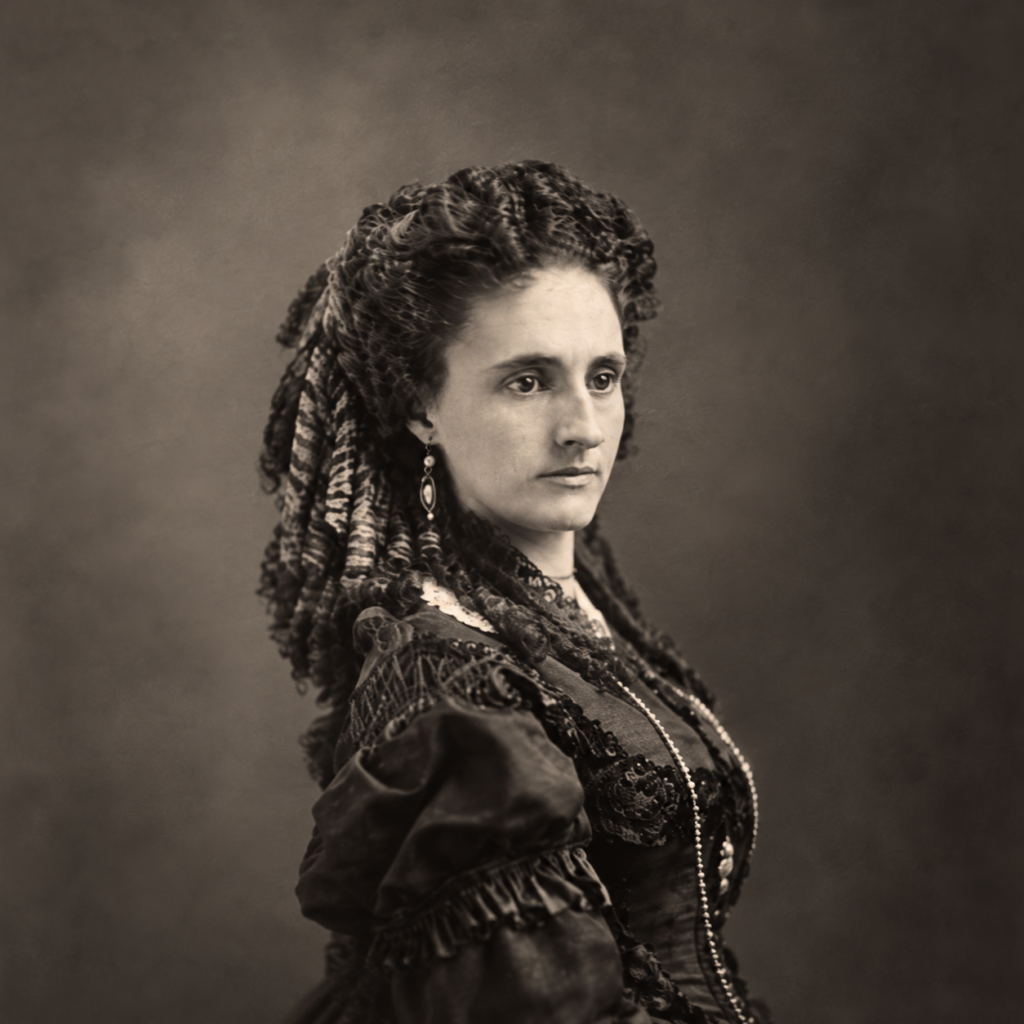
Lisle Lester, born Sophia Walker, was a pioneering advocate for women’s rights. Her cremated remains were left unclaimed by her half-sister and remained in storage at Fresh Pond Crematory in Middle Village, New York. Through generous donations from the community and four years of work and research, Soroptimist International of Fond du Lac was granted repatriation of her cremated remains through a formal court process in New York. Lisle Lester is coming back home to be laid to rest in Fond du Lac, the city in which her family settled and the city of her childhood.
Soroptimist International of Fond du Lac invites you to a memorial service on Saturday, October 17th at 10:00 a.m. at Calvary Cemetery’s indoor chapel, to honor Lisle’s life and to lay her cremated remains to rest. After the services, there is a gathering at Avenue 795 for connection and fellowship.
Sophia Walker Bloomer Higbee, aka Lisle Lester, was born in Athol, Massachusetts on 29 June 1837, the daughter of Lyman Walker and Emeline Ingram. In 1844 her family moved to Fond du Lac, Wisconsin, then a fledgling hamlet of only 4 houses. She always referred to her childhood as the happiest time of her life.
At age 14, Sophia attended Lawrence University’s Female Collegiate Institute, where she became well known for her many pranks. After finishing her education, she began publishing the Badger State Monthly, the first magazine to be established in Wisconsin. During this time, she also married her business manager, Isaac Bloomer.
In 1860 she enrolled in a summer drama course in Cincinnati, conducted by James Murdoch, an acclaimed actor of the time. At the end of that summer, she returned to Wisconsin, and became the editor of the Prison City Item in Waupun, where she began to use her nom de plume Lisle Lester.
She moved to the Milwaukee Sentinel, where she hired the first women typesetters. Their success in improving the paper brought Lisle a job offer, as editor of the Pacific Monthly in San Francisco, which she accepted. She is credited with hiring the first women typesetters in California. While in California Lisle began her theatrical presentations, which garnered sold-out performances and world-wide fame.
While traveling by stagecoach to one of her presentations, the stagecoach went over a cliff, and Lisle suffered a broken leg. She returned to Wisconsin to begin “a year on crutches,” where she renewed an acquaintance with Judge Lyman Higbee. They were married in Fond du Lac on Oct. 7, 1873.
Lisle moved to Idaho with her new husband. A year later, she returned to the stage. During this time, she gave her support to many women’s causes with national attention. By 1880, Lisle found a new home in New York City, where she began to publish the Dramatic Magazine. It was while she was preparing to attend a convention in Chicago that she became ill and died on June 22, 1888.