


Wisconsin News
Warmer temperatures, spring frosts cause challenges for Wisconsin apple growers
By Elissa Eaton
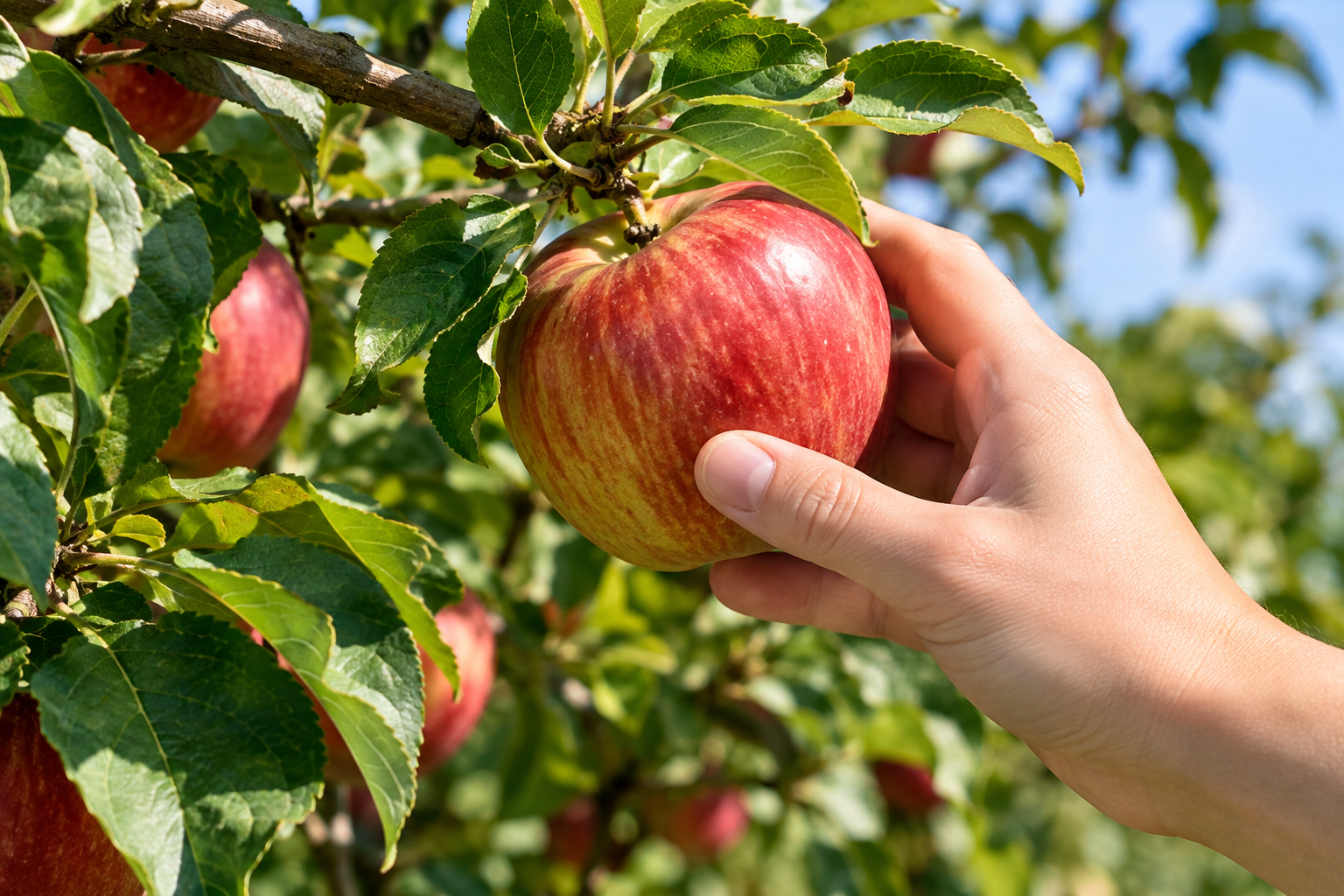
Many Wisconsin orchards are preparing to open their fields to apple pickers across the state. But after a year of late frosts, drought and hail damage in some areas, many apple orchards are not expecting a large yield this fall.
Mark Christopher is an owner of Maple Leaf Orchard in Spring Valley. He said warmer temperatures in March and April caused the trees in his western Wisconsin orchard to start blooming earlier. When temperatures dropped again, it damaged the crop.
“We’re definitely in a reduced-crop situation, and the biggest reason for that is because of spring frost,” he said. “The (trees) that were in full bloom when the frost events hit, they got hit the worst, and so we don’t have the crop that we normally would have.”
Spring frosts occur when temperatures drop below freezing after plants have come out of their winter dormancy. For apple trees, the frost damages and reduces crop yield. Apple trees in the western part of the state tend to bloom earlier due to warmer temperatures.
“I am definitely seeing a pattern where we’re having warmer early springs, and that can set us up for this kind of a problem a little bit more,” Christopher said.
Paul Schwabe is a horticulturist at Johnson’s Nursery in Menomonee Falls. He said apple growers in the eastern part of Wisconsin tend to have cooler springs which makes the trees less susceptible to frost damage.
“Usually we bloom a little later in southeast Wisconsin because we’re by Lake Michigan.” Schwabe said. “It’s like a big, cold ice block, and it does offer us some protection in the spring from frost.”
Longer falls can also play a role in the apple harvest. This year a strong El Niño is expected to bring warmer temperatures to Wisconsin this fall and winter.
Amaya Atucha, a professor in the Department of Plant and Agroecosystem Sciences at the University of Wisconsin-Madison, said growers have to adapt to these conditions.
“The trees are active for a longer period of time after harvest,” Atucha said about the rising fall temperatures. “How do we keep those trees healthy and not stressed so that they can go into winter well prepared to withstand the freezing conditions?”
Another side effect of a warmer fall: Fruits can ripen faster than normal. Christopher said this can mean growers have to frantically pick the apples before they fall off the trees. He said that has happened to his pear trees, and could happen to other varieties this fall.
“When varieties are really starting to come in that ripen all at once — boy, yeah, that causes that panic-picking,” he said. “You really have to just go at it full bore to get them off the trees before they hit the ground.”
Atucha said growers can reduce stress to their trees by providing irrigation or hailnets — but that can get expensive.
“There are things that we can do to reduce stress, but all of that, at the end of the day, adds up in the cost,” she said.
Despite the challenges, Atucha said many farmers were still able to produce a good yield. She encourages people to visit their local orchard this fall.
“Even though we have had a lot of challenges this growing season, the growers are amazing and incredibly resilient and they always manage to have a relatively good crop,” she said.
Wisconsin Public Radio, © Copyright 2026, Board of Regents of the University of Wisconsin System and Wisconsin Educational Communications Board.